

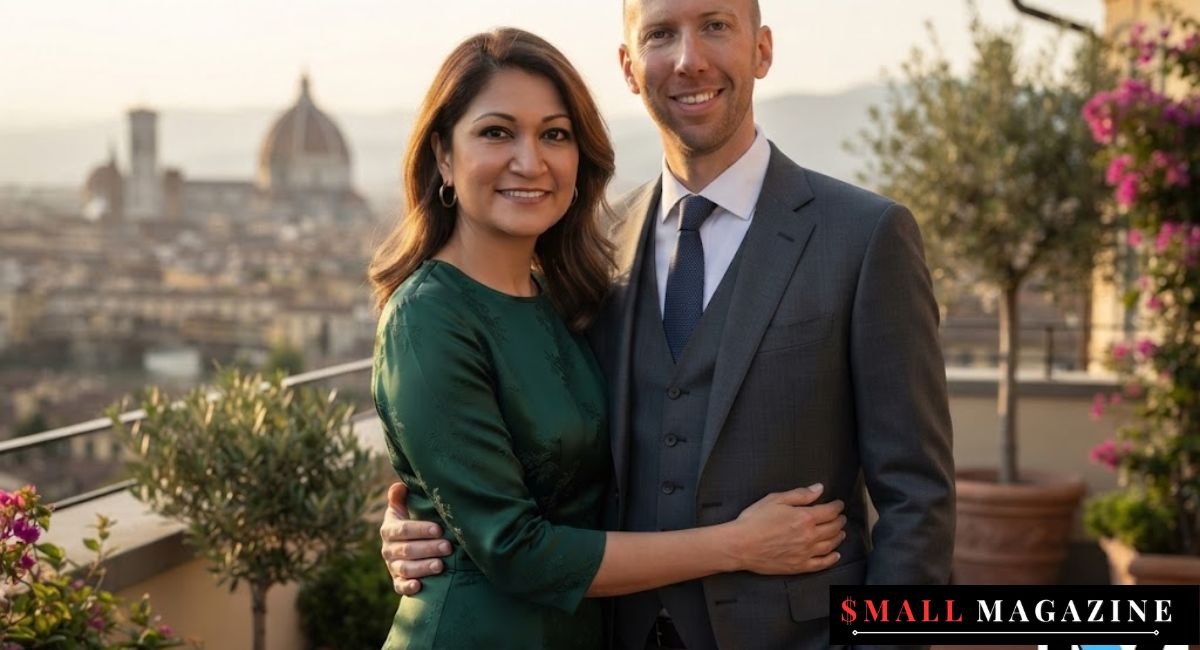
Paul Werdel has quietly established himself as one of the most astute and influential minds behind modern digital media and newsroom architecture. While many contemporary figures chase the limelight, Werdel built his reputation entirely behind the scenes, steering major global publications through critical digital transformations. Born and raised with an innate curiosity for how stories are told and consumed, he carved out a formidable professional background that spans prominent leadership roles with international broadcasting networks and elite digital publishing giants. His journey from a university studio manager to a senior product director at The New York Times illustrates a career defined by technical precision, editorial insight, and a constant drive to modernize how audiences engage with global news.
Beyond his extensive corporate and journalistic achievements, Werdel is widely recognized by the public as the supportive husband of prominent PBS News Hour co-anchor Amna Nawaz. This high-profile marriage often places him in the periphery of public attention, yet Werdel consistently maintains a grounded, fiercely private lifestyle that prioritizes family and professional integrity. His popularity among media analysts stems from his rare ability to bridge the gap between traditional journalism and emerging digital distribution platforms. Observers frequently look to his career trajectory as a masterclass in adapting to the rapid evolution of 21st-century media without ever compromising on factual rigor.
As public interest in the power players behind major news organizations continues to grow, our exclusive magazine profile takes a deep dive into Werdel’s foundational years, academic milestones, and groundbreaking industry contributions. Alongside this comprehensive biographical overview, we present an insightful and rare discussion touching on media strategy, digital evolution, and the art of maintaining balance away from the camera’s glare.
Quick Profile Table
| Feature | Details |
| Full Name | Paul Werdel |
| Date of Birth | November 17 |
| Age | Mid-40s |
| Place of Birth | Baltimore, Maryland, USA |
| Nationality | American |
| Profession | Media Executive, Product Director, Former Journalist |
| Years Active | 2000–Present |
| Education | Bachelor of Arts in Journalism, University of Maryland |
| Religion | Christianity |
| Marital Status | Married |
| Spouse | Amna Nawaz |
| Net Worth | Estimated between $1 Million – $5 Million |
| Family Members | Amna Nawaz (Wife), Two Daughters |
Career Highlights
-
The New York Times Leadership: Served in critical capacities including Senior Editor of Platforms, Senior Product Manager, and Product Director, helping spearhead digital distribution strategies.
-
Global Broadcasting Stints: Contributed significantly as a producer and director for BBC World News and as a news editor for Al Jazeera English.
-
Digital Media Transformation: Played an instrumental role at TPM Media LLC, championing independent digital journalism and audience engagement models.
-
Academic Contributions: Began his professional life educating the next generation of reporters as an assistant lecturer and broadcast production coordinator at the University of Maryland.
-
Industry Thought Leadership: Recognized across media circles for championing user-centric product development that merges editorial values with interactive technology.
-
Low-Profile Influence: Maintained a powerful behind-the-scenes impact on how millions of readers consume breaking daily journalism worldwide.
Early Life and Family Background
Paul Werdel was born in Baltimore, Maryland, where he experienced a stable, intellectually stimulating upbringing that nurtured his early fascination with current events and storytelling. Growing up during a period of rapid technological transition in households across America, Werdel developed an early habit of consuming multiple newspapers and international broadcasts daily. His parents fostered an environment that emphasized academic discipline, critical thinking, and civic awareness, encouraging him to look beyond local horizons and understand global sociopolitical dynamics.
During his childhood and adolescence in Maryland, Werdel was actively involved in school publications and community projects. He possessed a natural inclination toward organization and technical coordination, often spending his free time experimenting with early desktop publishing tools and audio-visual equipment. This foundational curiosity set him apart from many of his peers, directing his focus squarely toward the mechanics of mass communication long before he entered university.
The familial values instilled during his upbringing—namely humility, strong work ethic, and quiet perseverance—became the bedrock of his character. Unlike many media figures who crave public adulation, Werdel learned the value of foundational support systems early on. This balanced domestic background allowed him to navigate the high-pressure environments of major global newsrooms with a level head, steadfast focus, and an unwavering commitment to accuracy.
Education and Personal Development
Driven by his passion for media, Werdel enrolled at the University of Maryland in 1998, immersing himself in the rigorous study of journalism. During his undergraduate years, he wasted no time gaining practical experience, taking on the demanding role of News Studio Manager at UMTV Limited from 2000 to 2002. This hands-on environment required him to master the technical complexities of live broadcasting, equipment maintenance, and team coordination under tight deadlines. He officially graduated with a Bachelor of Arts in Journalism in 2002.
Rather than jumping straight into commercial reporting, Werdel chose to deepen his academic roots. He stayed at his alma mater as a lecturer and production coordinator, teaching broadcast journalism to incoming students and managing complex university media resources. This transitional period sharpened his leadership capabilities, forcing him to articulate the theoretical and practical nuances of news production to aspiring reporters. Colleagues from this era recall him as deeply analytical, calm under pressure, and possessing an instinctive grasp of emerging digital workflows.

Beyond his professional training, Werdel cultivated diverse personal interests, ranging from modern architectural history to long-distance endurance running and digital design philosophy. These hobbies provided a vital mental outlet, helping him balance the relentless 24-hour news cycle. His commitment to continuous self-improvement ensured that he was not merely a traditional journalist, but a forward-thinking technologist ready for the digital revolution sweeping the media landscape.
Career Journey and Breakthrough
Werdel’s professional career is a testament to calculated risk-taking and relentless adaptability. In 2004, he took a major leap by joining BBC World News as a producer and director, where he coordinated international broadcast segments and worked alongside some of the sharpest minds in global news. This international experience exposed him to the complexities of foreign correspondence and geopolitical reporting, expanding his worldview and refining his editorial instincts.
In 2008, Werdel transitioned to the Al Jazeera Media Network, serving first as deputy news editor and later as news editor. During a turbulent era defined by historic global events, he managed high-stakes newsroom operations, guiding teams of reporters to deliver accurate, fast-paced coverage. Following his time at Al Jazeera, he moved to TPM Media LLC as a senior associate editor, where he gained critical insight into the survival and growth strategies of digital-first independent political journalism.
His ultimate career breakthrough arrived when he joined The New York Times in October 2014. Over nearly four years, Werdel held pivotal leadership positions, including senior editor of platforms, senior product manager, and ultimately product director. In these roles, he bridged the traditional divide between the newsroom and engineering teams, developing digital products that transformed how millions of subscribers experienced award-winning journalism on mobile devices and web platforms.
Personal Life and Relationships
Despite operating in elite professional circles alongside prominent public figures, Paul Werdel maintains a fiercely guarded private life. He met his wife, acclaimed journalist Amna Nawaz, through a mutual friend, leading to an instant connection that blossomed over shared professional values and deep mutual respect. The couple married in 2007 and have spent nearly two decades building a harmonious life together. They are the proud parents of two daughters, balancing demanding media careers with dedicated family time.
Werdel and Nawaz have successfully cultivated a peaceful domestic sanctuary in Washington, D.C., shielding their children from the intrusive glare of tabloid media. Friends describe Werdel as a devoted, hands-on father who actively supports his wife’s trailblazing career while managing his own demanding professional endeavors. He prefers intimate family gatherings and quiet evenings at home over high-society galas, embodying a lifestyle centered on authenticity and emotional grounding.
Remarkably, Werdel has navigated his entire career completely free of public controversy or scandal. His clean reputation is a direct reflection of his personal discipline, professional boundaries, and deep respect for privacy. By keeping his personal affairs away from internet spotlight seekers, he has ensured that his family remains a safe, stable harbor amidst the chaotic demands of public-facing journalism.
Public Image, Influence, and Social Media Presence
Paul Werdel’s public image is characterized by quiet competence, intellect, and professional gravitas. Unlike modern influencers who court viral fame, Werdel maintains an extremely minimal social media presence, choosing to let his corporate contributions speak for themselves. Within media and tech circles, however, he is regarded as a heavyweight innovator whose product strategies helped shape the digital architecture of modern legacy publishing.
His influence is felt most strongly by younger media producers and product managers who study his transition from traditional broadcast production to digital executive leadership. Werdel represents a vital bridge generation—professionals who understood the ethical foundations of print and television newsrooms while aggressively embracing the data-driven requirements of app design, user engagement, and platform distribution.
Looking forward, Werdel continues to advise and consult within the media technology space, exploring how artificial intelligence, ethical data management, and shifting subscriber habits will impact the next decade of news delivery. While he may avoid the camera, his lasting imprint on how digital stories are packaged and consumed ensures his ongoing relevance as a quiet titan of modern media.
Exclusive Interview with Paul Werdel
Interviewer: Paul, thank you so much for sitting down with SmallMagazine. You have spent over two decades witnessing the evolution of the media industry from the inside. When you reflect on your journey, what core philosophy has guided your career?
Paul Werdel: Thank you for having me. I think the core philosophy has always been respect for the audience’s time and intelligence. Whether I was managing a university studio or directing digital products at The New York Times, the fundamental question was always: how do we deliver truth and context without adding noise? Technology changes every few years, but human curiosity remains constant.
Interviewer: You transitioned successfully from traditional news production at the BBC and Al Jazeera into digital product leadership. What was the hardest part of merging the traditional newsroom mindset with tech product development?
Paul Werdel: The biggest hurdle is overcoming the natural friction between speed and perfection. Traditional journalists are trained to vet every single word meticulously before publication. Tech product developers operate on iterative cycles—launching, learning, and refining quickly. Bringing those two worlds together requires immense empathy. You have to show engineers why editorial integrity is non-negotiable, while helping editors see that digital user experience is just as vital as the prose itself.
Interviewer: During your time at The New York Times, digital transformation was accelerating rapidly. What project or milestone from that era are you most proud of looking back?
Paul Werdel: I’m most proud of how we aligned our product teams directly with the reporting mission. It wasn’t about chasing empty metrics or clickbait algorithms; it was about building sustainable digital formats that honored deep investigative reporting. When you build tools that make it frictionless for millions of people to read complex, important stories on their phones during a morning commute, that is deeply rewarding.
Interviewer: You have lived and worked in high-pressure environments across Baltimore, London, Doha, and Washington, D.C. How have these different cultural hubs shaped your worldview?
Paul Werdel: Living abroad changes your relationship with your own assumptions. Working inside international newsrooms like the BBC and Al Jazeera teaches you very quickly that every story has multiple valid lenses. It humbles you. It makes you realize that what feels like a monumental headline in one country might look entirely different from another perspective. That global lens stays with you forever.
Interviewer: With your wife, Amna Nawaz, being one of the most recognizable anchors on television, your household is deeply immersed in journalism. How do you maintain a healthy boundary between work and home life?
Paul Werdel: By making home a sanctuary where current events take a backseat to real life. We both care deeply about the state of the world, but when we walk through our front door, our primary roles are being parents and partners. We leave the newsroom at the office. Setting those intentional boundaries is the only way to stay grounded and protect your family’s peace.
Interviewer: You maintain a very low profile online, avoiding the usual traps of self-promotion. Is that a deliberate choice, and why is privacy so valuable to you?
Paul Werdel: Absolutely, it’s deliberate. Privacy gives you the mental space to think clearly. If you spend all your energy curating a public-facing avatar, you lose the quiet solitude required to do deep, meaningful work. For me, life is much richer when lived authentically offline with the people who matter most.
Interviewer: Looking at the current media landscape, what advice would you give to young journalists or media tech students entering the field today?
Paul Werdel: Master the fundamentals of storytelling, but don’t be afraid of technology. Do not view digital tools as a threat to traditional reporting; view them as amplifiers. The industry will always need people who can separate fact from noise, but it desperately needs people who can figure out how to deliver those facts where the audience actually lives.
Interviewer: How do you recharge when you experience burnout from the relentless pace of the modern news cycle?
Paul Werdel: I unplug completely. I go for long runs, spend uninterrupted time outdoors with my daughters, and read physical books—no screens. Stepping away from the digital grid is essential maintenance for anyone working in media. You cannot pour from an empty cup.
Interviewer: If you could look ten years into the future, what changes do you hope to see in how society consumes and trusts journalism?
Paul Werdel: I hope we see a return to sustainable, trust-based models where quality reporting is valued and properly funded. We are navigating a wave of digital noise and synthetic content right now, which makes human-led, verified journalism more critical than ever. My hope is that audiences become even more discerning, and that the industry rises to meet that demand with uncompromising integrity.
Interviewer: Paul, thank you for sharing your insights with our readers today.
Paul Werdel: Thank you. It was a genuine pleasure.
Frequently Asked Questions (FAQs)
Q1: Who is Paul Werdel?
Paul Werdel is an American media executive, former news editor, and digital product director known for his leadership roles at The New York Times, BBC News, and Al Jazeera. He is also widely recognized as the husband of PBS News anchor Amna Nawaz.
Q2: What is Paul Werdel’s professional background?
He holds a degree in journalism from the University of Maryland and has worked as a producer for BBC World News, a news editor for Al Jazeera English, and a senior product director for The New York Times.
Q3: How long have Paul Werdel and Amna Nawaz been married?
The couple married in 2007 after meeting through a mutual friend, and they have shared over eighteen years of marriage.
Q4: Do Paul Werdel and Amna Nawaz have children?
Yes, they share two daughters, whom they raise with a strong commitment to privacy away from the media spotlight.
Q5: What was Paul Werdel’s role at The New York Times?
He served in multiple strategic capacities, including Senior Editor of Platforms and Senior Product Director, helping guide the publication’s digital evolution.
Q6: Why does Paul Werdel maintain a low public profile?
Werdel prefers a grounded, private lifestyle, deliberately avoiding social media self-promotion to protect his family’s peace and maintain focus on his behind-the-scenes work.
Conclusion
The career of Paul Werdel stands as an inspiring blueprint for modern behind-the-scenes leadership in digital media. From his early days managing news studios in Maryland to directing platform strategy for The New York Times, Werdel has consistently navigated the complex intersection of editorial rigor and technological innovation. His ability to adapt to shifting global landscapes while maintaining absolute professional integrity has earned him the quiet admiration of peers across the international broadcasting community.
Beyond his impressive corporate achievements, his steadfast partnership with Amna Nawaz and their shared dedication to family life highlight a man who understands true balance. In an era defined by constant digital clamor and over-exposure, Werdel’s choice to prioritize privacy, substance, and genuine human connection sets a refreshing standard. He remains a powerful reminder that monumental impact does not require a public stage.
As the media industry continues its rapid transformation in the face of new digital frontiers, minds like Paul Werdel’s remain invaluable. His journey proves that lasting influence is built on steady vision, ethical foundations, and an unwavering commitment to quality. Audiences and media analysts alike will undoubtedly continue to value his legacy as a master builder of modern newsroom architecture.