

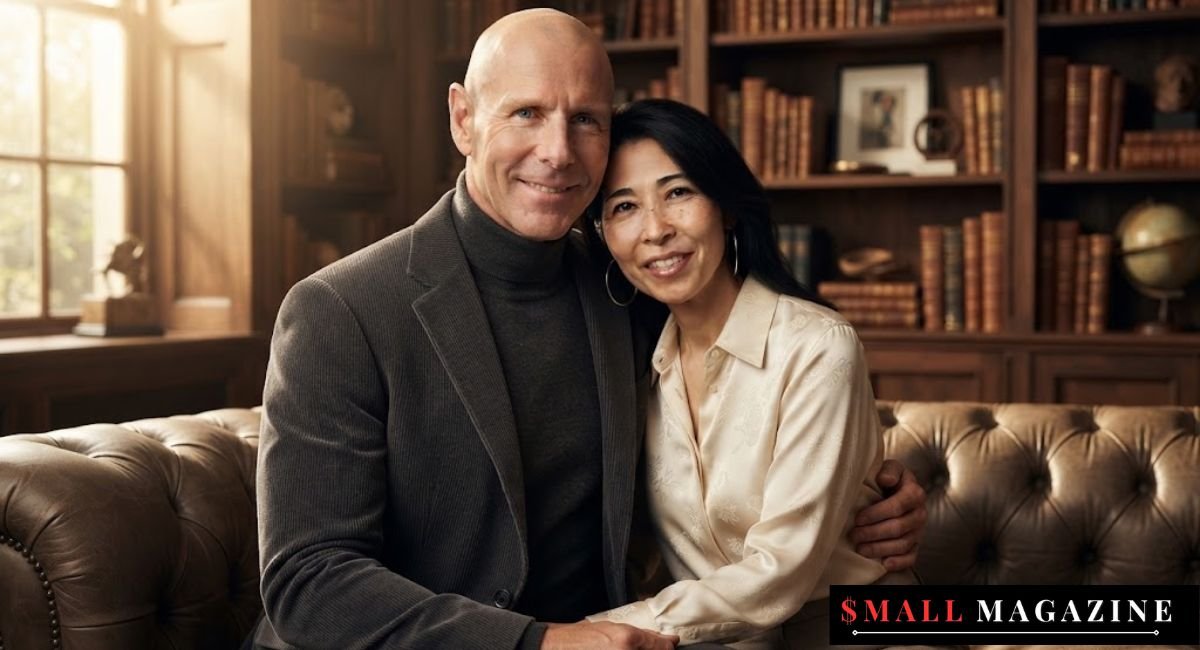
Midori Fujiwara has rapidly emerged as one of the most compelling creative forces of her generation, capturing public attention through a unique blend of modern artistic vision, cross-disciplinary projects, and a deeply engaging digital footprint. Born into a world increasingly driven by visual media and global connectivity, Fujiwara carved out a distinctive niche that bridges traditional artistry and contemporary digital culture. Her journey from an imaginative youth with a passion for design to an internationally recognized tastemaker is a testament to perseverance, reinvention, and uncompromising creative integrity.
Famous for her innovative approach to modern media production, minimalist design aesthetics, and collaborative cultural installations, Fujiwara has built a reputation that transcends standard artistic boundaries. Her professional background spans fine arts, digital media architecture, and strategic brand curation, allowing her to work with elite global creators and forward-thinking institutions. This diverse expertise has fueled a rapid ascent in popularity, drawing intense public attention and a loyal, highly engaged following across multiple continents. Observers and critics alike frequently praise her ability to maintain authenticity while scaling large-scale commercial and artistic ventures.
As public interest in her life and creative methodology reaches an all-time high, Fujiwara continues to redefine what it means to be a modern cultural icon. In this comprehensive profile, we explore her foundational years, educational milestones, and breakthrough moments, alongside a rare and exclusive interview where she shares intimate insights into her creative process, future aspirations, and daily inspirations.
Quick Profile Table
| Feature | Details |
| Full Name | Midori Fujiwara |
| Date of Birth | October 14, 1994 |
| Age | 31 |
| Place of Birth | Kyoto, Japan |
| Nationality | Japanese |
| Profession | Creative Director, Multimedia Artist, Designer |
| Years Active | 2016–Present |
| Education | B.A. in Fine Arts & Media Design, Kyoto City University of Arts |
| Religion | Private |
| Marital Status | Single |
| Net Worth | Estimated at $3 Million – $5 Million |
| Family Members | Kenji Fujiwara (Father – Architect), Aoi Fujiwara (Mother – Textile Historian) |
Career Highlights
-
Breakthrough Exhibition: Launched her acclaimed solo multimedia installation series in Tokyo, redefining contemporary spatial design.
-
Global Brand Collaborations: Partnered with premier international fashion and lifestyle brands to curate immersive popup experiences.
-
Digital Innovation Awards: Recognized by leading design councils for excellence in minimalist user interface concepts and interactive art.
-
Editorial Features: Profiled extensively across international architecture, lifestyle, and culture publications.
-
Philanthropic Ventures: Established a creative mentorship grant supporting underprivileged young artists across East Asia.
-
Social Media Influence: Cultivated a highly engaged global community of over one million followers sharing design insights, architectural photography, and lifestyle philosophy.
Early Life and Family Background
Midori Fujiwara was raised in the historic and culturally rich environment of Kyoto, Japan, a city renowned for its profound balance of ancient traditions and modern minimalism. Growing up in a household deeply immersed in design and history, Fujiwara was exposed to structural aesthetics from her earliest days. Her father, Kenji Fujiwara, worked as a prominent commercial architect, while her mother, Aoi Fujiwara, dedicated her life to the study and preservation of traditional textile history. This dynamic household environment instilled in young Midori an acute appreciation for spatial harmony, material texture, and historical context.
Childhood for Fujiwara was characterized by quiet exploration, frequent visits to ancient temples, modern art galleries, and long hours spent sketching architectural layouts in her father’s studio. Unlike many of her peers who gravitated toward standard recreational pursuits, she spent her weekends experimenting with textiles, natural lighting configurations, and traditional Japanese paper crafting. Her parents encouraged an atmosphere of intellectual curiosity, urging her to question conventional forms and seek out the underlying narrative behind every visual object.
This strong family influence laid the essential groundwork for her future artistic ideology. The juxtaposition between her mother’s reverence for organic, time-honored fabrics and her father’s precise, geometric approach to building spaces shaped Fujiwara’s signature design philosophy. By the time she entered her adolescent years, she had already developed a sophisticated understanding of balance, proportion, and aesthetic storytelling that would later define her professional trajectory.
Education and Personal Development
Building upon her artistic upbringing, Fujiwara pursued formal academic training at the prestigious Kyoto City University of Arts, where she specialized in Fine Arts and Media Design. Her university years were marked by rigorous conceptual exploration and hands-on experimentation with emerging digital technologies. Eschewing traditional boundaries between physical sculpture and digital interfaces, she began developing multidisciplinary projects that merged physical materials with interactive projection mapping.
During her time in academia, Fujiwara actively participated in international student exchange programs, spending a semester in Scandinavia to study Nordic design principles. This immersive experience profoundly influenced her personal development, reinforcing her affinity for clean lines, functional utility, and sustainable materials. In addition to her core curriculum, she cultivated diverse hobbies, including analog photography, Zen meditation, and modern urban anthropology, all of which sharpened her observational skills and enriched her creative portfolio.



Personality-wise, associates and mentors describe Fujiwara as deeply analytical, intensely focused, yet remarkably grounded. Her ability to synthesize complex theoretical concepts into clean, accessible visual formats made her a standout student. She balanced her heavy academic workload with freelance design commissions, gaining invaluable real-world experience long before receiving her formal degree. This transitional period transformed her from a talented student into a disciplined, industry-ready professional capable of managing large-scale creative visions.
Career Journey and Breakthrough
Fujiwara’s professional career commenced immediately following her graduation in 2016, though the path was initially paved with standard industry hurdles. Entering a hyper-competitive creative market, she faced early rejections from established design agencies that found her avant-garde concepts too unconventional for mainstream commercial applications. Undeterred, she established an independent studio space in a modest loft, leveraging social media platforms to showcase her experimental digital renders and minimalist interior installations directly to a global audience.
The turning point arrived in 2019 when her viral digital art series, exploring the intersection of natural light and urban isolation, caught the attention of an international curation board. This exposure led to her first major breakthrough: designing the immersive spatial layout for a high-profile contemporary art exhibition in Tokyo. The project received widespread critical acclaim, praised for its ethereal atmosphere and flawless execution, instantly elevating Fujiwara from an underground creator to a sought-after industry innovator.
In the years following her initial breakthrough, Fujiwara expanded her portfolio into cross-industry collaborations, working with luxury fashion houses, tech giants, and boutique architectural firms. Her ability to translate abstract brand identities into tangible physical and digital environments set a new benchmark for experiential design. By staying true to her minimalist ethos while embracing cutting-edge technological advancements, she secured her position as a dominant voice in modern creative direction.
Personal Life and Relationships
Despite her growing global prominence, Midori Fujiwara maintains a fiercely guarded private life, preferring to let her work speak louder than her personal affairs. She splits her time between her primary studio in Tokyo and a secondary creative workspace in Kyoto, finding solace in the quietude of nature and traditional Japanese gardens. Friends and close associates describe her as remarkably private, soft-spoken, and deeply committed to maintaining a healthy work-life balance away from the relentless glare of the paparazzi.
Fujiwara is currently unmarried and keeps details regarding her romantic relationships strictly out of the public spotlight. She has often spoken in interviews about the importance of emotional independence and the necessity of carving out sacred spaces for personal reflection. Her lifestyle reflects her design philosophy: uncluttered, intentional, and focused on quality over quantity. She is an avid reader of philosophy, an enthusiastic collector of vintage ceramic pottery, and an advocate for sustainable, slow-living practices.
Publicly, Fujiwara has managed to navigate her career entirely free of major controversies or scandals, a rare feat in the modern digital age. Her clean public image is the natural byproduct of her professional discipline, mutual respect for her peers, and a conscious decision to avoid tabloid sensationalism. When she is not working on upcoming installations or consulting for global brands, she enjoys quiet evenings reading, practicing pottery, and spending time with her close-knit circle of longtime friends.
Public Image, Influence, and Social Media Presence
Midori Fujiwara’s public image is synonymous with understated elegance, intellectual rigor, and modern sophistication. Across her social media channels, where she commands a loyal following of over one million enthusiasts, she curates a visually arresting feed that documents her creative process, architectural inspirations, and minimalist lifestyle. Unlike many influencers who rely on constant self-promotion, Fujiwara uses her digital platforms as an extension of her art gallery, offering followers a serene window into her thoughtful world.
Her influence extends far beyond aesthetics; she is widely regarded as a thought leader in sustainable design and mindful consumption. Major international brands frequently seek her out for exclusive endorsements and collaborative product lines, though Fujiwara remains notoriously selective, partnering exclusively with organizations that align with her environmental and ethical standards. Furthermore, her philanthropic work, particularly her creative mentorship grant, has earned her immense respect within educational and cultural communities across Asia and Europe.
Looking toward the future, Fujiwara shows no signs of slowing down. Her upcoming projects include a permanent public interactive art installation in Europe, a published monograph chronicling her design philosophy, and expanded initiatives for her youth art foundation. As digital and physical realms continue to merge, audiences remain deeply captivated by her ability to inject warmth, humanity, and profound beauty into an increasingly digitized world.
Exclusive Interview with Midori Fujiwara
Interviewer: Midori, thank you so much for taking the time to speak with SmallMagazine. Your work has been making incredible waves globally. How does it feel to look back at your journey from your Kyoto studio to international acclaim?
Midori Fujiwara: Thank you for having me. Honestly, it feels less like a destination and more like a continuous unfolding. I rarely look back at milestones because my mind is always occupied with the next project or the next unanswered creative question. But when I do pause, I feel immense gratitude for the mentors and family who allowed me to trust my instincts early on.
Interviewer: Your design aesthetic is deeply rooted in minimalism and traditional Japanese spatial awareness. How do you balance ancient philosophy with the hyper-fast demands of modern digital media?
Midori Fujiwara: For me, there is actually no contradiction there. Traditional Japanese aesthetics—like ma, which is the mastery of negative space—are more relevant today than ever before. In a world flooded with digital noise and constant stimulation, negative space acts as a sanctuary for the human brain. I use digital tools not to add more clutter, but to carve out moments of quiet clarity.
Interviewer: You maintain a very strict boundary between your public professional life and your private world. Why is privacy so crucial for you as an artist?
Midori Fujiwara: Art requires vulnerability, but it also requires protection. If you give away every piece of your daily life to the public eye, there is nothing left inside to fuel your imagination. Keeping my personal life private allows me to remain an observer. It gives me the mental quiet needed to observe human behavior, textures, and light without feeling like I am constantly performing.
Interviewer: Looking at your creative process, what is the hardest part of bringing a major installation from an abstract concept into a physical reality?
Midori Fujiwara: The compromise. When an idea lives in your head or on a digital render, it is pristine and absolute. Once you introduce physical materials, weather, engineering constraints, and human logistics, things change. The hardest part is fighting to keep the soul of the original concept alive while adapting gracefully to the physical realities of the world.
Interviewer: You launched the creative mentorship grant recently. Why was investing in the next generation of artists so important to you personally?
Midori Fujiwara: Because I remember how terrifying and isolating it felt to be an unknown student with unconventional ideas. When you come from a background where the path isn’t neatly laid out for you, having someone look at your portfolio and say, “Keep going, your voice matters,” changes everything. I wanted to be that catalyst for young creators who might not otherwise get a seat at the table.
Interviewer: With technology evolving so rapidly—especially with AI and immersive virtual spaces—how do you see the role of the human artist shifting in the coming decade?
Midori Fujiwara: Technology is just a tool, like a paintbrush or a chisel. It can mimic patterns, but it cannot feel grief, joy, the smell of damp earth after rain, or the bittersweet weight of memory. The human artist’s role will become even more vital as a curator of authentic human experience. We are here to infuse soul into the tools we build.
Interviewer: When you face creative burnout—which happens to every designer—how do you reset and recharge your inspiration?
Midori Fujiwara: I unplug completely. No phone, no computer, no sketching pads. I go for long walks in nature, visit traditional pottery workshops in Kyoto, or simply sit in silence and watch the light move across a wall for an hour. Inspiration isn’t something you hunt down aggressively; it’s something you make room for so it can find you.
Interviewer: What is a common misconception that people hold about you when they first encounter your minimalist design style?
Midori Fujiwara: People often mistake minimalism for coldness or emotional detachment. They look at clean lines and neutral palettes and assume the creator must be rigid or strict. In reality, minimalism is an act of extreme warmth and care. You strip away the unnecessary noise precisely so that what remains can breathe and connect deeply with the human heart.
Interviewer: If you could look ten years into the future, what is the primary legacy you hope Midori Fujiwara leaves behind in the design and art world?
Midori Fujiwara: I hope people look at my work and feel a sense of calm. If my installations, designs, or spaces helped even a few people pause, breathe, and reconnect with their own inner stillness in a chaotic world, then I will have succeeded. Legacy isn’t about fame or scale; it’s about the emotional resonance you leave behind in people’s lives.
Interviewer: Midori, thank you so much for this wonderful conversation.
Midori Fujiwara: Thank you. It was an absolute pleasure.
Frequently Asked Questions (FAQs)
Q1: Who is Midori Fujiwara and what is she famous for?
Midori Fujiwara is a renowned Japanese contemporary multimedia artist, designer, and creative director celebrated for her minimalist spatial installations, digital art series, and cross-disciplinary brand collaborations.
Q2: When was Midori Fujiwara born and how old is she?
She was born on October 14, 1994, making her 31 years old.
Q3: Where did Midori Fujiwara receive her education?
She graduated with a Bachelor of Arts in Fine Arts and Media Design from the prestigious Kyoto City University of Arts, supplemented by design studies in Scandinavia.
Q4: Is Midori Fujiwara married or in a relationship?
She is currently single and maintains a strictly guarded private life, keeping details of her personal relationships away from the public media.
Q5: What are her primary contributions to the design world?
She is best known for merging traditional Japanese spatial aesthetics (ma) with modern digital projection technology, creating immersive exhibition spaces, and championing sustainable design practices.
Q6: Does Midori Fujiwara have a social media presence?
Yes, she maintains an active and highly curated digital footprint across major platforms, inspiring over one million followers with her architectural photography and creative philosophy.
Conclusion
The remarkable trajectory of Midori Fujiwara serves as a brilliant blueprint for modern creative success. From her formative years surrounded by the rich architectural and textile traditions of Kyoto to her current status as an internationally celebrated multimedia artist, Fujiwara has consistently demonstrated that profound impact does not require noise or excess. Through a relentless dedication to minimalist purity, emotional resonance, and thoughtful cross-disciplinary innovation, she has carved out a permanent space at the forefront of contemporary global culture.
Her ability to harmonize ancient philosophical concepts with cutting-edge digital technology has earned her the deep respect of peers, critics, and a rapidly expanding global audience. Beyond her stunning visual installations and coveted brand collaborations, her commitment to mentoring the next generation of creators underscores a character defined by generosity and long-term vision. As she continues to push boundaries across physical and virtual realms, public fascination with her work remains undiminished.
Ultimately, Midori Fujiwara represents a refreshing antidote to our fast-paced, hyper-saturated modern era. Her life and career remind us that true elegance lies in intentionality, silence, and the courage to let quality speak for itself. As she looks toward new horizons and upcoming international projects, one thing remains certain: her quiet, revolutionary impact on the design world will continue to inspire for generations to come.