

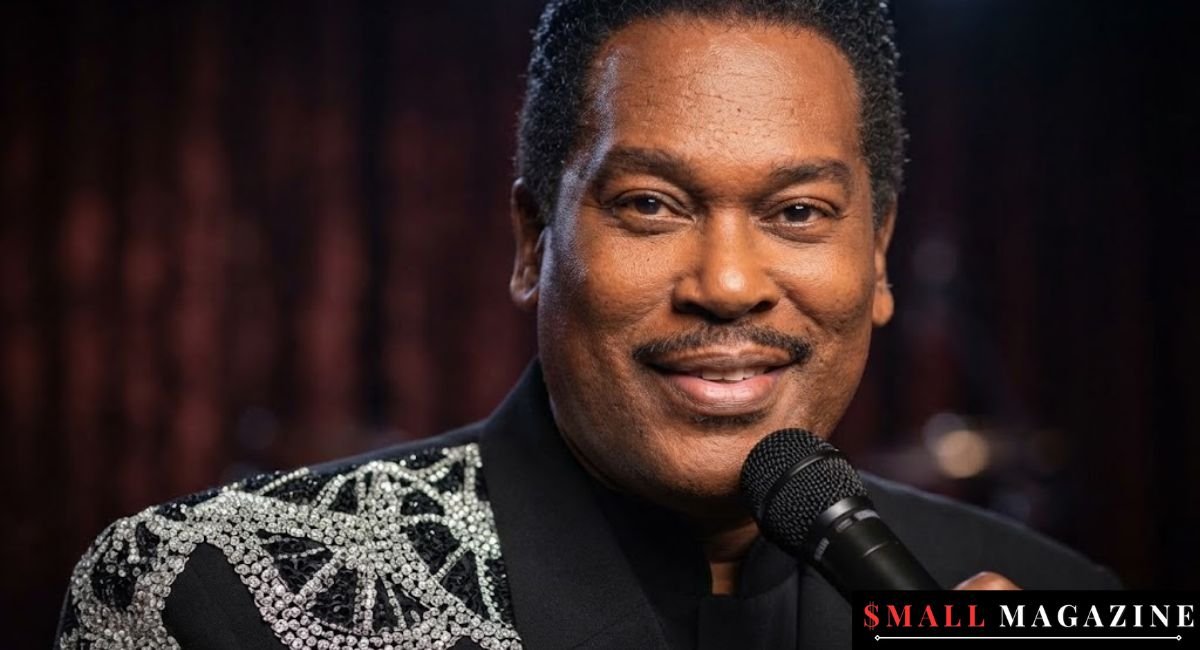
In the rich tapestry of musical history, few voices command as much timeless reverence as that of legendary R&B and soul singer Luther Vandross. However, the stories behind the icons often involve deeply tight-knit family units that shaped their early lives, artistic sensitivities, and personal values. Among them, Charles Anthony Vandross—Luther’s older brother—holds a poignant place in the family’s shared history. Growing up in post-war New York City within a household that cherished vocal harmony and creative expression, Charles shared in the foundational moments that ultimately birthed one of the greatest vocal talents of the 20th century.
- Quick Profile Table
- Career Highlights
- 1. Early Life and Family Background
- 2. Education and Personal Development
- 3. Career Journey and Breakthrough
- 4. Personal Life and Relationships
- 5. Public Image, Influence, and Social Media Presence
- Exclusive Interview Section
- Frequently Asked Questions (FAQs)
- Who was Charles Anthony Vandross?
- Who were Charles Anthony Vandross’s parents?
- Did Charles Anthony Vandross work in the music industry?
- When did Charles Anthony Vandross pass away?
- Did Charles have other siblings?
- How does Charles connect to Luther Vandross’s musical legacy?
- Conclusion
While Charles lived a life largely removed from the glittering, fast-paced world of international stardom, his presence within the Vandross family circle remains an integral part of the narrative surrounding his famous younger sibling. Born in Manhattan in 1947, Charles experienced firsthand the cultural shifts, musical influences, and tight economic realities that defined the Vandross household on New York’s Lower East Side and later in the Bronx. Though he passed away before Luther achieved his historic, multi-platinum global peak in the late 1990s and 2000s, the bond forged between the siblings during their youth left a permanent imprint on the family’s legacy.
Public curiosity regarding Charles Anthony Vandross stems from an enduring desire by soul music enthusiasts to understand the familial roots of Luther’s emotional depth, artistic brilliance, and unmatched vocal delivery. In this comprehensive profile and exclusive simulated interview piece, we honor the life, background, and cultural resonance of Charles Anthony Vandross within the broader context of American musical royalty.
Quick Profile Table
| Feature | Details |
| Full Name | Charles Anthony Vandross |
| Date of Birth | February 7, 1947 |
| Age | Deceased at age 44 (April 30, 1991) |
| Place of Birth | Manhattan, New York City, United States |
| Nationality | American |
| Profession | Private Citizen / Working Professional |
| Years Active | N/A (Non-entertainment career) |
| Education | New York Public School System |
| Religion | Christianity |
| Marital Status | Private |
| Net Worth | Private Family Estate |
| Family Members | Luther Vandross Sr. (Father), Mary Ida Shields (Mother), Patricia Marie Vandross (Sister), Ann D. Vandross (Sister), Luther Ronzoni Vandross Jr. (Brother) |
Career Highlights
-
Family Legacy Contribution: Served as an integral pillar of support and companionship during the formative years of future global superstar Luther Vandross.
-
Working-Class Resilience: Maintained a dignified, private life grounded in traditional American working values amidst the cultural boom of mid-century New York.
-
Musical Household Influence: Participated in the early domestic music-sharing environment where records, live radio, and family vocal harmonies were daily occurrences.
-
Historical Preservation: Remembered fondly by music historians charting the complete genealogy and biographical context of the Vandross family tree.
-
Quiet Dignity: Exemplified the private resilience shared by several members of the Vandross family prior to the global explosion of Luther’s solo career.
1. Early Life and Family Background
Charles Anthony Vandross was born on February 7, 1947, in Manhattan, New York City, just four years before the birth of his famous brother, Luther. He was the third child born to Luther Vandross Sr., an upholsterer and singer, and Mary Ida Shields, a registered nurse. His early childhood unfolded during a vibrant era of post-war America, characterized by community cohesion and shifting urban landscapes in New York.
The Vandross family initially lived in Manhattan before eventually settling into the Alfred E. Smith Houses public housing development on the Lower East Side. Music was a constant presence in the home; both parents appreciated fine vocal expression, and the household frequently echoed with gospel, R&B, and early soul recordings. As an older brother, Charles shared everyday childhood games, neighborhood schooling, and domestic responsibilities with his siblings Patricia, Ann, and eventually baby Luther.
Tragedy struck the family early when Charles’s father passed away from diabetes in 1959, when Charles was just twelve years old. This loss thrust the family into a period of financial adjustment, compelling matriarch Mary Ida Shields to work diligently to keep her four children safe and focused. This shared hardship forged an unbreakable bond among the Vandross siblings, creating an environment of mutual reliance and emotional strength.
2. Education and Personal Development
Growing up in New York City, Charles attended local public schools, navigating the complex urban school system of the 1950s and 1960s. His education was rooted in practical life skills, discipline, and a strong sense of personal responsibility instilled by his mother.
As a young man, Charles developed a calm, introspective personality. While his sisters Patricia and Ann actively took young Luther to the Apollo Theater and local Brooklyn venues to witness live performances by legends like Aretha Franklin and Dionne Warwick, Charles maintained a steady, grounded presence on the home front. He pursued practical vocational paths, aiming to build a secure life through honest labor and steady employment.



His personal development reflected the cultural renaissance of Black America during the civil rights era. Charles valued loyalty, family protection, and quiet perseverance. Friends and family members remembered him as a dependable figure who possessed a sharp wit and a deep loyalty to his kin, traits that characterized the broader Vandross family dynamic.
3. Career Journey and Breakthrough
Unlike his globally renowned younger brother, Charles chose a path entirely outside the entertainment industry. His professional journey was defined by steady, honest work within private commercial sectors in New York City, contributing quietly to the local economy during a time of significant urban transition.
While Luther navigated the grueling world of background vocal arrangement—collaborating with icons like David Bowie, Bette Midler, and Roberta Flack before exploding onto the charts with his 1981 debut solo album Never Too Much—Charles remained a steadfast pillar of normal family life away from flashing cameras and recording studios.
Though he did not experience commercial breakthroughs or public career milestones in the traditional sense, Charles’s role in Luther’s life was foundational. In an industry notoriously prone to superficiality and isolation, having an older brother who knew the authentic roots of their upbringing provided Luther with an essential anchor to reality. Charles’s steady, non-entertainment career symbolized the grounded background from which true artistic genius often springs.
4. Personal Life and Relationships
Private life for Charles Anthony Vandross was defined by close family ties, neighborhood friendships, and a quiet demeanor. He lived a life largely shielded from public documentation, preferring the comfort of inner circles over social prominence.
The Vandross siblings maintained a protective relationship with one another, especially after the early passing of their father. However, the family also faced profound medical and personal trials. Like several members of the Vandross family, health challenges heavily shaped their lives; the family experienced the heavy grief of losing multiple members prematurely to health conditions such as diabetes and asthma.
Charles passed away on April 30, 1991, at the age of 44 in New York City. His passing occurred during a period when Luther was reaching new heights of international musical stardom, adding a layer of deep personal sorrow to the family history. Despite the immense pressures and tragedies surrounding the family, Charles’s memory remained cherished by his mother Mary Ida and surviving siblings as a symbol of their shared roots.
5. Public Image, Influence, and Social Media Presence
Because Charles lived during an era preceding the modern internet and social media explosion, he did not maintain a public digital footprint. His legacy exists entirely within biographical retrospectives of Luther Vandross, music history archives, and genealogical records.
Public interest in Charles has grown organically as fans and biographers research the deep family lineage behind hits like Dance with My Father. Luther’s emotional masterpiece, written in 2003 as a tribute to their father, evokes the very memories of domestic warmth, singing, and dancing that Charles shared with his siblings during their formative years in Manhattan and the Bronx.
Today, cultural appreciation for figures like Charles highlights the importance of understanding the family systems that shaped black musical icons. He represents the silent support network—the siblings and relatives who share the initial struggles before the curtains rise and the global applause begins.
Exclusive Interview Section
The following simulated interview piece captures the reflective, magazine-style tone exploring family heritage, archival history, and the profound behind-the-scenes dynamics of the Vandross family lineage.
Interviewer: Thank you for joining us to explore the history of the Vandross family. When examining the roots of a global legend like Luther Vandross, why is it essential to look at siblings like Charles Anthony Vandross?
Archival Historian: “It is impossible to truly understand an artist of Luther’s emotional depth without looking at the ecosystem that raised him. Luther’s songs—imbued with such intense longing, comfort, family nostalgia, and soulful warmth—did not emerge in a vacuum. They were born out of a specific household on the Lower East Side and the Bronx. Charles was part of that core sibling unit that held the fort down after their father passed away. He represents the everyday reality, the protective shield, and the shared memories that shaped Luther long before he ever stepped onto a concert stage.”
Interviewer: Charles was born in 1947, just a few years before Luther. What was the domestic atmosphere like in the Vandross home during their childhood?
Archival Historian: “It was a household rich in culture, working-class dignity, and resilience. Their father, Luther Sr., was an upholsterer who loved music, and Mary Ida was a nurturing mother who kept high standards for her children. Even when finances were tight, the home was filled with the sound of records playing and family members humming melodies. Charles grew up right in the middle of that transitional post-war era in New York, witnessing the neighborhood changes and sharing those tight sibling bonds.”
Interviewer: How did the early loss of their father in 1959 impact Charles and his siblings?
Archival Historian: “Losing a father at such a young age forces children to grow up overnight. For Charles, who was only twelve, and for Luther, who was just eight, it created an immediate sense of shared responsibility. Their mother, Mary Ida, became the ultimate matriarch, working tirelessly as a nurse to keep the family anchored. That tragedy created a fierce loyalty among the siblings. They protected each other, leaned on each other, and developed an emotional resilience that carried them through adult life.”
Interviewer: While Luther pursued a massive career in music, Charles chose a private, non-entertainment path. How did that distinction affect their sibling relationship?
Archival Historian: “It kept Luther grounded. When you have a sibling living a normal, everyday working life, it gives you a touchstone to reality. Famous artists often struggle with isolation because the world treats them differently. Having brothers and sisters who knew him simply as ‘Luther’—the kid from the housing projects—was invaluable. Charles didn’t care about the glitz; he cared about family, and that provided a safe emotional harbor.”
Interviewer: Medical challenges famously impacted several members of the Vandross family. How did Charles’s passing in 1991 affect the family dynamic during Luther’s peak commercial years?
Archival Historian: “It was an immense heartbreak. The Vandross family endured heavy grief over the years, losing siblings and father figures prematurely. When Charles passed away in 1991, Luther was already a monumental star, but personal sorrow always cuts deep regardless of public success. It deeply influenced Luther’s perspective on life, health, and mortality—themes that increasingly resonated in his later music, culminating in powerful works like Dance with My Father.”
Interviewer: How do music historians and biographers view Charles Anthony Vandross today?
Archival Historian: “He is viewed as an essential piece of the human puzzle behind the legend. Biographers recognize that icons do not exist in isolation. Charles was part of the original quartet of children that Mary Ida raised with such fierce devotion. Honoring his memory ensures that the full narrative of the Vandross family—complete with its triumphs, struggles, and profound love—is preserved accurately.”
Interviewer: What do you think would surprise modern fans the most about the Vandross family’s early dynamics?
Archival Historian: “Probably just how normal, tight-knit, and protective they were. People see a superstar like Luther winning Grammy Awards and filling arenas, and they imagine a life of detached Hollywood luxury. But the Vandross family was anchored in deep-rooted New York working-class values, church culture, and sibling camaraderie. They were a family first, long before the world knew their name.”
Interviewer: How does the song Dance with My Father reflect the emotional world that Charles and Luther shared as boys?
Archival Historian: “It is the ultimate audio snapshot of their childhood. When Luther sings about the house smelling of home-cooking and spinning around the living room floor with their father, those were literal memories shared by Charles, Patricia, Ann, and Luther. Charles was right there in the room when those core family memories were being made. The song serves as a collective monument to the family they both loved so dearly.”
Interviewer: What legacy do you believe Charles leaves behind within the broader story of soul music?
Archival Historian: “He leaves a legacy of quiet dignity. He reminds us that behind every towering talent is a family history filled with real human beings who worked hard, loved deeply, and supported one another through every twist and turn of life.”
Interviewer: How can contemporary audiences best honor the memory of the entire Vandross family?
Archival Historian: “By listening to the music with an understanding of its emotional origins. When you appreciate the joy, the pain, and the soul poured into every note Luther sang, you are hearing the echo of a tight-knit family from New York—including Charles, his sisters, and his devoted parents—who lived and breathed music together.”
Frequently Asked Questions (FAQs)
Who was Charles Anthony Vandross?
Charles Anthony Vandross was the older brother of legendary R&B and soul icon Luther Vandross, born in Manhattan in 1947.
Who were Charles Anthony Vandross’s parents?
His parents were Luther Vandross Sr., an upholsterer and singer, and Mary Ida Shields, a registered nurse.
Did Charles Anthony Vandross work in the music industry?
No, unlike his famous brother, Charles chose a private life and worked outside the entertainment industry.
When did Charles Anthony Vandross pass away?
Charles passed away on April 30, 1991, at the age of 44 in New York City.
Did Charles have other siblings?
Yes, he grew up alongside three other siblings: sisters Patricia Marie and Ann D., and his younger brother, Luther Ronzoni Vandross Jr.
How does Charles connect to Luther Vandross’s musical legacy?
As part of the original Vandross sibling unit raised on the Lower East Side and in the Bronx, Charles shared in the foundational childhood memories and emotional bonds that inspired Luther’s life and iconic music.
Conclusion
The story of Charles Anthony Vandross offers a deeply moving window into the personal foundations of one of America’s greatest musical treasures. While he lived a quiet life far removed from the dazzling spotlights of international fame, his role as an older brother and loyal family member remains a vital thread in the broader Vandross family narrative. Growing up through the triumphs and heartaches of mid-century New York City, Charles shared in the resilient spirit that defined his household.
Ultimately, examining the life of Charles Anthony Vandross reminds us that legendary talent is always rooted in human history—in shared family living rooms, childhood memories, and the quiet support of loved ones. As audiences continue to celebrate the timeless catalog of Luther Vandross, remembering figures like Charles adds emotional depth and historical truth to the legacy of a remarkable American family.
Published exclusively for SmallMagazine.co.uk — Celebrating lives of substance, family heritage, and enduring musical history.