

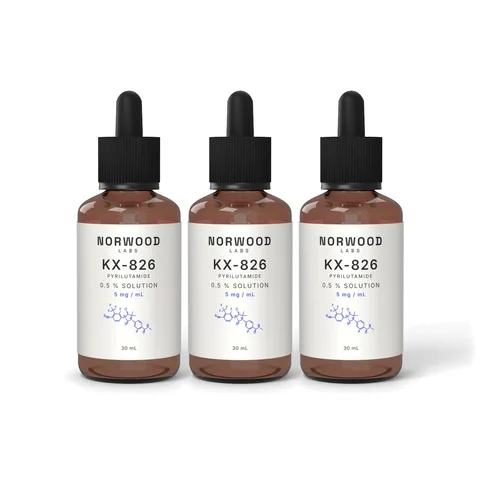
Androgen receptors regulate signals involved in hair follicle biology and skin function. Pyrilutamide KX-826 is a topical investigational compound studied for receptor-level effects. Researchers examining buy pyrilutamide uk should distinguish laboratory findings from established clinical evidence. Understanding receptor binding, cellular responses, and experimental limitations helps clarify its potential role. The central question concerns how KX-826 may interrupt androgen signaling without directly altering hormone production.
- Androgen Receptors Control Follicular Signaling
- Competitive Binding Shapes Receptor Activity
- What Happens After Receptor Blockade?
- Research Models Reveal Distinct Responses
- Which Factors Influence Experimental Findings?
- Clinical Evidence Refines Mechanistic Understanding
- Why Receptor Selectivity Matters
- The Difference Between Binding and Benefit
Androgen Receptors Control Follicular Signaling
Androgen receptors are proteins that translate hormonal signals into cellular activity. In susceptible scalp follicles, dihydrotestosterone (DHT) can activate these receptors. This process contributes to follicular miniaturization and progressive hair thinning. Pyrilutamide is investigated as a receptor antagonist, targeting this signaling pathway.
Competitive Binding Shapes Receptor Activity
KX-826 is designed to compete with androgens for receptor binding. When the compound occupies a receptor, hormonal activation may decrease. This interaction can reduce downstream signaling without directly suppressing testosterone production. Laboratory investigations examine receptor occupancy and changes in androgen-responsive gene expression. Such measurements help determine whether the compound produces the intended molecular response.
What Happens After Receptor Blockade?
Once androgen signaling decreases, researchers can investigate downstream cellular changes. These may include altered gene transcription and reduced androgen-responsive activity. In follicular models, the key question concerns protection against DHT-associated miniaturization. However, receptor antagonism alone cannot establish improved hair density. Cell behavior, tissue responses, and clinical outcomes require separate evaluation.
Research Models Reveal Distinct Responses
Experimental systems help isolate different stages of androgen signaling. Each model answers a different biological question. Researchers examining buy pyrilutamide uk should distinguish these methods to avoid mistaking laboratory observations for clinical proof.
- Receptor assays measure binding and competitive activity.
- Cell cultures examine androgen-responsive molecular changes.
- Follicular models assess biological responses to hormonal exposure.
- Clinical trials measure changes in human hair counts.
Results must be interpreted according to each model’s limitations.
Which Factors Influence Experimental Findings?
Receptor interactions depend on concentration, exposure duration, and biological conditions. Researchers must also consider how the compound reaches target tissues. Formulation characteristics can affect local availability and measured responses. Appropriate controls help distinguish genuine activity from background variation.
Key experimental considerations include:
More Read

- Researchers compare treated samples against suitable controls.
- Assays establish concentration-dependent receptor activity.
- Repeated measurements reveal changes over time.
- Safety assessments identify unwanted biological effects.
- Replication strengthens confidence in observed findings.
No single measurement fully explains the compound’s biological behavior.
Clinical Evidence Refines Mechanistic Understanding
Laboratory findings provide a rationale for human studies, not a guarantee of success. Clinical trials investigating topical KX-826 for androgenetic alopecia assess safety, tolerability, and changes in target-area hair counts. Researchers must evaluate those outcomes independently of receptor-binding results.
Why Receptor Selectivity Matters
KX-826 research highlights an important distinction between hormonal production and receptor activity. Blocking a signaling pathway differs from reducing circulating hormone levels. This distinction helps researchers investigate targeted approaches to androgen-related hair loss. However, actual selectivity, tissue exposure, and long-term effects require evidence from appropriate experiments and clinical studies.
The Difference Between Binding and Benefit
A receptor assay can demonstrate molecular activity, yet follicular recovery involves additional biological processes. That distinction remains central to evaluating KX-826. Strong receptor-level evidence supports further investigation, but clinical measurements determine whether the mechanism translates into meaningful outcomes. Research therefore needs both molecular precision and measurable human results.
FAQs
What is pyrilutamide KX-826?
Pyrilutamide is an investigational androgen receptor antagonist studied for androgenetic alopecia. Research examines its ability to interfere with androgen-mediated signaling.
Does KX-826 reduce testosterone production?
Its proposed mechanism targets androgen receptors rather than testosterone synthesis. This distinction does not establish the absence of systemic effects.
Which models help evaluate receptor interactions?
Researchers use receptor-binding assays, cell cultures, and follicular models. Human trials provide separate evidence about safety and clinical outcomes.
Does receptor blockade guarantee hair regrowth?
No. Reduced androgen signaling does not guarantee measurable regrowth. Clinical outcomes depend on treatment exposure, biological responses, and trial findings.