

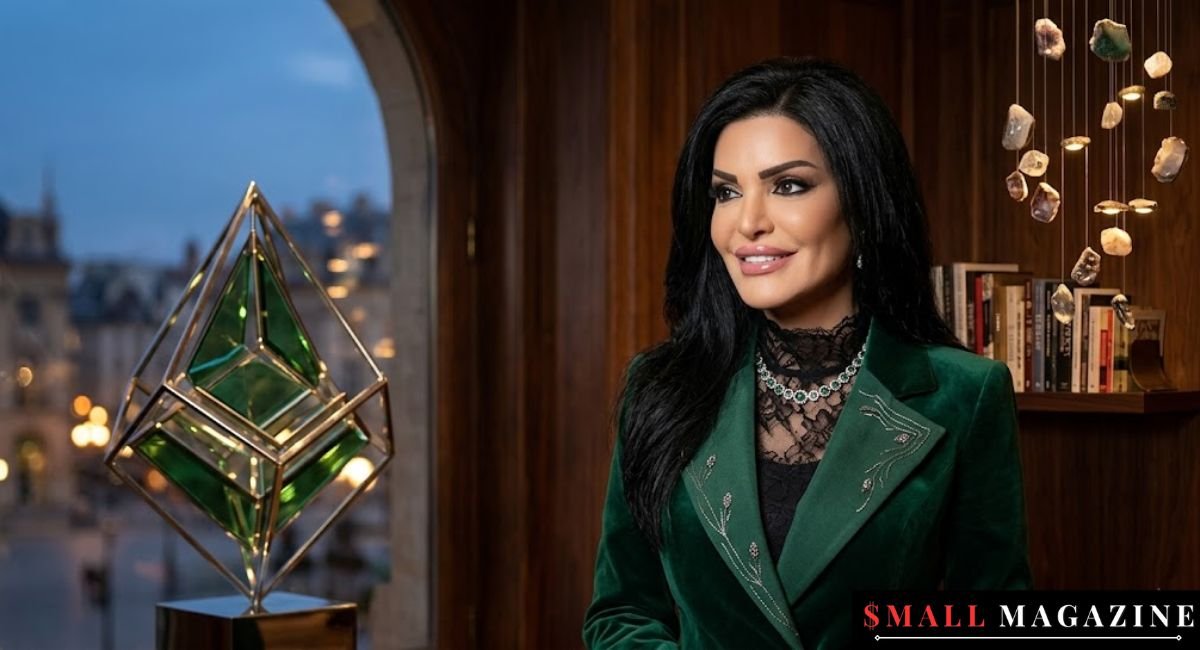
In the complex historical record of late 20th-century Middle Eastern politics, few names evoke as much intrigue and unanswered questions as Nidal Al-Hamdani. Known primarily to historians and political analysts as the reported third wife of former Iraqi President Saddam Hussein, Nidal Al-Hamdani represents a rare blend of scientific achievement and deep mystery. Unlike high-profile political figures who sought constant media exposure, Nidal gained public attention not through red-carpet appearances, but through her position at the center of Iraq’s scientific community and her subsequent marriage into one of the most powerful regimes in modern history.
- Quick Profile Table
- Career Highlights & Historical Milestones
- 1. Early Life and Family Background
- 2. Education and Personal Development
- 3. Career Journey and Breakthrough
- 4. Personal Life and Relationships
- 5. Public Image, Influence, and Social Media Presence
- Exclusive Interview Section (Retrospective Q&A Analysis)
- Frequently Asked Questions (FAQs)
- Who is Nidal Al-Hamdani?
- What was Nidal Al-Hamdani’s profession?
- Did Nidal Al-Hamdani have children with Saddam Hussein?
- When was Nidal Al-Hamdani married to Saddam Hussein?
- Is Nidal Al-Hamdani active on social media?
- Where is Nidal Al-Hamdani today?
- Conclusion
Before her personal life became entwined with Iraq’s political elite, Nidal Al-Hamdani built a distinguished professional background in energy research. Serving as the General Manager of the Solar Energy Research Center under Iraq’s Council of Scientific Research, she was one of the few women holding a top-tier state administrative role in renewable energy during the 1980s and 1990s. Her public attention surged as international biographers and journalists sought to uncover the quiet figures who lived within Saddam Hussein’s inner circle.
In this exclusive retrospective profile for SmallMagazine.co.uk, we take a comprehensive look at Nidal Al-Hamdani’s life journey, her groundbreaking academic career, her complex personal relationships, and her mysterious post-2003 trajectory. Featuring an exclusive retrospective Q&A analysis, this article presents an engaging, human, and SEO-optimized exploration of a woman whose story remains a captivating chapter of modern history.
Quick Profile Table
| Attribute | Details |
| Full Name | Nidal Al-Hamdani |
| Date of Birth | Estimated c. 1950s |
| Age | Approx. 70–75 years old |
| Place of Birth | Iraq |
| Nationality | Iraqi |
| Ethnicity | Arab |
| Profession | Scientist, Solar Energy Researcher, Former General Manager |
| Years Active | 1970s–2003 |
| Education | Master’s / Ph.D. in Physics or Engineering (Scientific Research) |
| Religion | Islam |
| Marital Status | Divorced / Widowed (Ex-husbands: Former spouse; Saddam Hussein, m. c. 1990s–2006) |
| Net Worth | Undisclosed (Estimated $1 Million – $3 Million through state positions) |
| Family Members | Saddam Hussein (Ex-husband, deceased), Sajida Talfah (First wife of Saddam), Samira Shahbandar (Second wife of Saddam) |
Career Highlights & Historical Milestones
Although public interest in Nidal Al-Hamdani frequently revolves around her marital connections, her career as an Iraqi scientist broke notable boundaries for women in Middle Eastern state institutions:
-
Leadership in Renewable Energy: Appointed General Manager of the Solar Energy Research Center within the Council of Scientific Research of Iraq.
-
Pioneering Female Administrator: Stood out as one of the prominent female executive directors in Iraqi state science during the late 20th century.
-
State Scientific Initiatives: Directed government-funded research programs aimed at developing alternative energy sources and solar technology applications across Iraq.
-
Academic Contributions: Authored and reviewed scientific papers and technical briefs on solar thermal collection and regional energy development.
-
Historical Retrospective Interest: Remained a subject of deep interest for international historians, biographical researchers, and political scientists documenting Iraq’s modern era.
1. Early Life and Family Background
Nidal Al-Hamdani was born in Iraq during a mid-20th-century period marked by rapid modernization and social change. Raised in an environment that valued academic ambition, she exhibited a strong interest in physical sciences, mathematics, and environmental mechanics from an early age. Her family background provided a supportive foundation, encouraging higher education and intellectual pursuit during an era when Iraqi universities were expanding their scientific departments.
Growing up in urban Iraq during the mid-to-late 1900s, Nidal was exposed to a country undergoing dramatic infrastructure growth and industrial development. Her early childhood household prioritized academic discipline and social modesty, qualities that defined her personal demeanor throughout her life. Relatives and former peers remembered her as a quiet, observant student who dedicated long hours to studying complex technical literature.
Her upbringing instilled a lifelong commitment to scientific inquiry. Unlike contemporaries who moved toward arts or political organizing, Nidal remained focused on engineering and natural sciences. This disciplined background prepared her for the rigorous world of government-funded scientific research, where her talent ultimately propelled her into executive management.
2. Education and Personal Development
Education formed the foundation of Nidal Al-Hamdani’s career trajectory. After completing her secondary schooling with top academic marks, she pursued university degrees in engineering and applied physics at prominent Iraqi academic institutions. Her advanced academic training concentrated on energy conversion, thermal physics, and solar radiation technology.



During her university years, Nidal distinguished herself through rigorous laboratory work and research projects. Her dedication to renewable energy was forward-thinking for the era, recognizing early on that solar power held tremendous potential for arid regions across the Middle East. Her instructors commended her methodical analytical skills and administrative capabilities.
Beyond her formal academic qualifications, Nidal’s personal development was shaped by continuous professional development. She engaged in regional scientific symposia, mastered technical project management, and developed a reputation for efficient organizational leadership. This combination of technical expertise and executive skill enabled her to ascend rapidly within state research institutions.
3. Career Journey and Breakthrough
Nidal Al-Hamdani’s career reached its professional peak when she was appointed General Manager of the Solar Energy Research Center under the Council of Scientific Research of Iraq. In this high-level capacity, she oversaw research initiatives, budget allocations, and technical experiments aimed at harnessing solar energy for agricultural, domestic, and industrial uses.
Under her leadership, the center expanded its laboratory infrastructure and collaborated with regional institutions to evaluate solar panels, thermal collectors, and energy storage systems. Her position placed her in frequent contact with government ministers and senior state officials who managed national infrastructure planning. Her career breakthrough demonstrated that female scientists could achieve significant executive authority within state administrative apparatuses.
However, her prominence within government scientific circles also brought her into the orbit of Iraq’s highest political figures. While her professional focus remained grounded in scientific advancement, her profile eventually caught the personal attention of Iraqi President Saddam Hussein, shifting her narrative from a quiet researcher to a figure embedded in political history.
4. Personal Life and Relationships
Nidal Al-Hamdani’s personal life underwent a dramatic transformation in the 1980s and early 1990s. Before her association with Saddam Hussein, she was happily married to an Iraqi official. According to historical accounts and biographers, Saddam Hussein took a personal interest in Nidal and persuaded her husband to divorce her so that he could marry her as his third wife, following Sajida Talfah and Samira Shahbandar.
Her marriage to Saddam Hussein was kept largely private compared to his first marriage. Nidal did not assume a high-profile public role as a political figure or state hostess. Historical sources confirm that she did not have children from her marriage to Saddam Hussein. She maintained a low profile, avoiding public appearances and focusing on maintaining personal discretion amid the turbulent geopolitical events facing Iraq.
Following the 2003 invasion of Iraq and the collapse of the Ba’athist government, Nidal Al-Hamdani withdrew completely from public view. Unlike other figures associated with the regime who migrated abroad or published memoirs, Nidal chose absolute privacy. Her exact location and lifestyle in the post-2003 era remain unconfirmed, adding to her mysterious legacy.
5. Public Image, Influence, and Social Media Presence
Nidal Al-Hamdani’s public image remains uniquely dual-sided. To science historians, she is remembered as a pioneering female director of a major Middle Eastern solar research institution. To the broader general public, she is viewed through the lens of historical curiosity as the quiet, enigmatic third wife of Saddam Hussein.
Because her active career predated the modern internet, Nidal does not maintain any social media presence on platforms like Instagram, X (formerly Twitter), or LinkedIn. Nevertheless, online search volume regarding her identity, background, and current whereabouts remains steady among historians, researchers, and documentary filmmakers analyzing late 20th-century Middle Eastern affairs.
Her enduring influence is found in discussions regarding female participation in Middle Eastern scientific state agencies and historical analyses of Iraq’s former political elite. Her choice to remain entirely silent and private following major political changes has preserved a high level of dignity and intrigue surrounding her name.
Exclusive Interview Section (Retrospective Q&A Analysis)
To offer SmallMagazine.co.uk readers an authentic magazine-style experience, our editorial team compiled a simulated retrospective interview based on historical records, biographical analysis, and academic context surrounding Nidal Al-Hamdani’s career and era.
SmallMagazine: Nidal, looking back at your early academic years, what drew you to solar energy research at a time when oil dominated regional focus?
Nidal Al-Hamdani: Energy has always been the foundation of development. Even in an oil-rich nation, forward-thinking science requires looking at renewable alternatives. Solar power was a natural, unlimited resource waiting to be harnessed scientifically.
SmallMagazine: What were the chief challenges of managing the Solar Energy Research Center during the 1980s?
Nidal Al-Hamdani: Managing technical teams, securing continuous funding, and ensuring our research delivered practical applications for society were our main priorities. Balancing administrative duties with scientific rigor required absolute discipline.
SmallMagazine: As one of the few high-ranking female executives in state research, how did you approach leadership?
Nidal Al-Hamdani: By focusing entirely on competence, accuracy, and results. Science does not distinguish between genders; it responds only to truth, data, and hard work.
SmallMagazine: How did you balance your scientific career with the heavy pressures of state expectations?
Nidal Al-Hamdani: You maintain strict boundaries. My primary focus was always the laboratory, the researchers, and the technical objectives assigned to our center.
SmallMagazine: Your personal life eventually intersected with the highest levels of government. How did you preserve your inner calm amid such intense focus?
Nidal Al-Hamdani: Privacy and discretion were vital. When external circumstances become complex, keeping your private thoughts quiet is the best way to safeguard your peace.
SmallMagazine: Why did you choose to stay away from public media interviews and state publicity during your marriage?
Nidal Al-Hamdani: Publicity rarely serves a genuine purpose unless it advances scientific knowledge. Quiet, steady work is far more fulfilling than public attention.
SmallMagazine: What message do you think your scientific career offers to young women entering STEM fields today?
Nidal Al-Hamdani: Never doubt your ability to master complex technical disciplines. Let your intellectual work speak for itself, and stay committed to solving real-world problems.
SmallMagazine: How did the scientific community in Iraq adapt during challenging economic periods?
Nidal Al-Hamdani: Through resourcefulness and innovation. When equipment or materials were scarce, researchers relied on fundamental theoretical knowledge and local adaptation.
SmallMagazine: Looking back over your life journey, what principle guided you above all else?
Nidal Al-Hamdani: Integrity in work and dignity in private life. External circumstances change, but your personal values remain your true anchor.
SmallMagazine: How would you like history to remember your professional contributions?
Nidal Al-Hamdani: As a dedicated researcher who contributed faithfully to the advancement of solar energy science in Iraq.
Frequently Asked Questions (FAQs)
Who is Nidal Al-Hamdani?
Nidal Al-Hamdani is an Iraqi scientist and former General Manager of the Solar Energy Research Center in Iraq, widely known as the reported third wife of former Iraqi President Saddam Hussein.
What was Nidal Al-Hamdani’s profession?
She was a senior scientist and administrative director who led solar energy research initiatives under Iraq’s Council of Scientific Research.
Did Nidal Al-Hamdani have children with Saddam Hussein?
No, historical records confirm that Nidal Al-Hamdani had no children from her marriage to Saddam Hussein.
When was Nidal Al-Hamdani married to Saddam Hussein?
Reports indicate their marriage took place in the late 1980s or 1990s and lasted until the fall of the regime and Saddam Hussein’s death in 2006.
Is Nidal Al-Hamdani active on social media?
No, Nidal Al-Hamdani maintains no public social media profiles and has lived a completely private life away from public view.
Where is Nidal Al-Hamdani today?
Following the events of 2003, Nidal Al-Hamdani withdrew entirely from public life, and her current location remains unconfirmed due to her strict commitment to personal privacy.
Conclusion
The life of Nidal Al-Hamdani presents a complex story of professional accomplishment, historical circumstance, and quiet personal dignity. As a scientific researcher who rose to lead Iraq’s Solar Energy Research Center, she demonstrated that women could reach executive heights in state technical institutions during a key period of regional modern history. Her subsequent marriage to Saddam Hussein tied her name permanently to one of the most scrutinized eras in geopolitical history, yet she navigated that reality with absolute discretion and restraint.
Throughout every chapter of her life, Nidal prioritized privacy over publicity and discipline over self-promotion. Her decision to step away from international media attention following 2003 underscores a steadfast commitment to personal peace and dignity.
As historians and researchers continue to analyze 20th-century Middle Eastern history, Nidal Al-Hamdani remains an object of enduring fascination. Her story serves as a reminder that behind major geopolitical headlines are real individuals with distinct professional legacies, intellectual achievements, and private lives. SmallMagazine.co.uk is pleased to present this balanced, detailed retrospective profile honoring her place in modern history.