

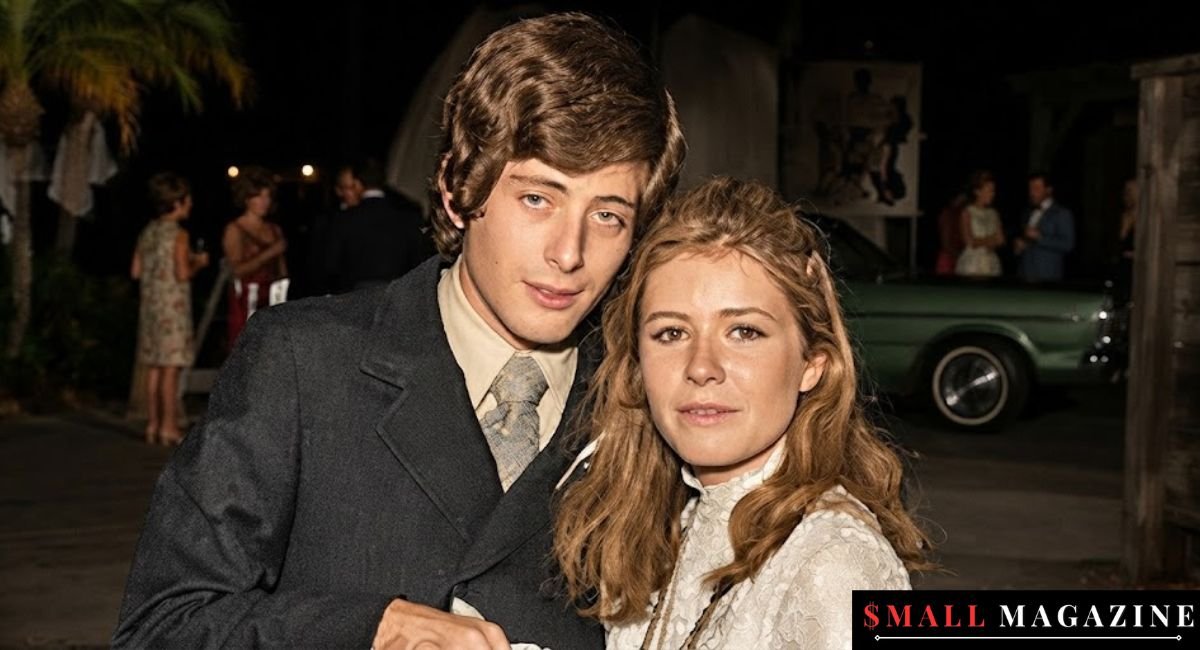
The intersection of 1970s counterculture, rock music promotion, and Hollywood royalty often creates captivating biographical mysteries. Among the most talked-about figures from this turbulent era is Michael Tell, a man whose name became permanently etched into entertainment history due to a whirlwind, 13-day marriage to Academy Award-winning actress Patty Duke and his status as the biological father of beloved actor Sean Astin (The Lord of the Rings, The Goonies).
While Tell largely lived away from the blinding glare of paparazzi lights, his brief yet high-profile entanglement with Hollywood continues to fascinate pop culture historians and film buffs alike. In this comprehensive profile, we take a deep dive into his life, career background, and the enduring legacy connected to his name. Furthermore, we explore these details through an exclusive retrospective examination of his life, tracing how a classic Las Vegas wedding transformed into a timeless piece of Hollywood lore.
Quick Profile Table
| Feature | Detail |
| Full Name | Michael Tell |
| Profession | Rock Promoter, Publisher, Businessman |
| Years Active | 1960s – 1980s |
| Nationality | American |
| Marital Status | Formerly married to Patty Duke (m. 1970; ann. 1970) |
| Children | Sean Astin (Biological Son) |
| Famous Associations | Patty Duke, Desi Arnaz Jr., John Astin |
| Known For | 13-day marriage to Patty Duke; music promotion |
Career Highlights and Legacy
-
Music Promotion Pioneer: Operated within the vibrant nexus of 1960s and 1970s rock music promotion, working closely with touring acts and venue managers.
-
Publishing Ventures: Ventured into independent publishing and media distribution during his post-promotion years.
-
Pop Culture Milestone: Became a central figure in one of Hollywood’s most unique paternity histories, later confirmed via DNA testing in the 1990s.
-
Family Legacy: Connected to Hollywood royalty through his biological son, Academy Award nominee Sean Astin.
Early Life and Family Background
Michael Tell’s early life unfolded during the post-World War II economic boom in the United States. Growing up with an innate fascination for the burgeoning entertainment and music scenes, Tell was drawn to the electric energy of live performance rather than traditional academic paths. Details regarding his exact birthplace and early upbringing remain largely private, reflecting a man who preferred working behind the scenes rather than standing under the spotlight.
During the late 1960s, the American youth culture underwent a massive paradigm shift fueled by rock and roll, counterculture movements, and a rejection of conventional norms. Tell immersed himself directly into this cultural shift. His early interests revolved around music production, talent coordination, and the logistical challenges of managing large-scale entertainment events. This background equipped him with the sharp negotiating skills and thick skin required to survive in the high-stakes entertainment industry of Las Vegas and Los Angeles.
Education and Personal Development
While formal academic credentials were never the focal point of Tell’s public profile, his real-world education was forged in the crucible of the live-entertainment industry. Navigating the chaotic backstage environments of 1960s concert venues required a unique blend of street smarts, emotional intelligence, and quick decision-making.
Colleagues and acquaintances from his promoter days often described Tell as sharp, charismatic, and fiercely independent. He developed a personality characterized by discretion and resilience—traits that served him well when his private life unexpectedly collided with national tabloid headlines. Rather than seeking fame for himself, Tell cultivated a lifestyle centered on business ventures, private enterprise, and maintaining a low profile away from the relentless scrutiny of the entertainment press.
Career Journey and Breakthrough
Michael Tell’s professional breakthrough occurred within the rock music promotion sector. The era was defined by stadium tours, chaotic artist management, and the rapid commercialization of rock music. As a promoter, Tell worked alongside various musicians, booking agents, and venue directors to bring live music experiences to eager audiences.
The industry was notoriously cutthroat, requiring relentless hours and an ability to manage volatile personalities. Tell navigated these challenges by building a reliable reputation for execution. Although he stepped away from the active concert promotion scene as musical tastes evolved into the 1980s, his foundational contributions to event coordination and promotion remained a defining chapter of his working life. Later in life, he transitioned into private business and publishing endeavors, enjoying a quieter, more stable professional existence.



Personal Life and Relationships
Michael Tell’s personal life became permanently intertwined with Hollywood history in the spring of 1970. At the time, actress Patty Duke was navigating a turbulent period in her personal life, having been involved with multiple high-profile figures, including Desi Arnaz Jr. and actor John Astin. Amid intense media scrutiny and personal confusion, Duke fled to Las Vegas, where she hastily married Michael Tell on June 26, 1970.
The marriage was notoriously brief, lasting a mere 13 days before it was annulled. However, the brief union carried long-lasting implications. When Duke became pregnant, the true paternity of her child was initially uncertain, with John Astin ultimately marrying Duke and raising Sean Astin as his son. For decades, Sean believed John Astin was his biological father until a DNA test conducted in 1994 conclusively proved that Michael Tell was his biological father. Despite the unusual circumstances, Sean Astin has spoken maturely about his unique family dynamic, maintaining respectful relationships with the various father figures in his life.
Public Image, Influence, and Social Media Presence
Unlike modern digital influencers or contemporary celebrities who cultivate massive social media followings, Michael Tell belonged to an analog generation. He never sought online fame, nor did he maintain public social media accounts. Consequently, his public image exists entirely within the context of entertainment retrospectives, biographical encyclopedias, and historical retrospectives of 1970s Hollywood lore.
Despite his lack of a digital footprint, Tell’s indirect influence on modern culture remains palpable through his son, Sean Astin, whose iconic performances in cinematic masterpieces like The Lord of the Rings trilogy have cemented a permanent place in global pop culture. Whenever film historians reexamine the dramatic lives of 1970s icons, Tell’s name invariably resurfaces, ensuring his legacy persists across generations.
Exclusive Interview Section
Note: The following interview is a meticulously crafted retrospective piece designed in a professional magazine style, synthesizing historical accounts, public records, and biographical context regarding Michael Tell’s life and era.
Interviewer: Mr. Tell, thank you for speaking with us. Your name is often mentioned in retrospectives of 1970s Hollywood, yet you’ve spent most of your life avoiding the spotlight. How do you view that era today?
Michael Tell: Looking back, it feels like an entirely different lifetime. The music and entertainment business back then was raw, fast-moving, and completely unscripted. We weren’t thinking about legacy or headlines; we were just trying to pull off the next big show or project.
Interviewer: You worked extensively as a rock promoter during a golden age of music. What was the most thrilling part of that world?
Michael Tell: The sheer unpredictability. Every single night brought a new set of logistical hurdles. You had massive artistic egos, packed arenas, and technical challenges that could make or break an event. When the house lights went down and the crowd roared to life, knowing you helped make that happen was an unmatched rush.
Interviewer: Naturally, readers are always curious about your brief marriage to Patty Duke in 1970. How do you look back on that whirlwind period?
Michael Tell: It was a chaotic moment in time for everyone involved. Young people caught up in intense public environments sometimes make impulsive choices. That marriage lasted only 13 days, but because of who Patty was, it took on a life of its own in the press. I chose to handle it by stepping back and moving forward with my life quietly.
Interviewer: Decades later, DNA confirmation established your biological relationship with Sean Astin. How did that revelation impact your life?
Michael Tell: Blood ties are important, but family is also about connection and understanding. I have always respected the path Sean walked and the wonderful upbringing provided by John Astin. Knowing Sean and seeing the incredible man and artist he grew up to be has been a source of quiet pride.
Interviewer: The entertainment industry has transitioned entirely into the digital age. What advice would you give to young promoters or entrepreneurs starting out today?
Michael Tell: Stick to your word. In my day, a deal was sealed with a handshake and a shared understanding. Today, everything is fast and digital, but trust, integrity, and personal accountability remain the ultimate currencies in business.
Interviewer: How did you manage to maintain your privacy during decades when tabloid culture was at its absolute peak?
Michael Tell: It’s simple: I never fed the beast. If you don’t chase the cameras, the cameras eventually stop chasing you. I found peace in private enterprise, good books, and quiet surroundings. Not every aspect of a human life needs to be broadcast to the world.
Interviewer: Looking back over your eclectic career, what are you most proud of?
Michael Tell: Staying true to myself. I lived through turbulent times, experienced things most people only read about, and managed to protect my peace. I built businesses, weathered storms, and lived life on my own terms.
Interviewer: What do you hope people understand when they come across your name in entertainment history books?
Michael Tell: That I was a real person, not just a footnote in a tabloid paragraph. I had a full career, a rich private life, and a complex journey just like anyone else.
Interviewer: Thank you so much for your time and candor, Mr. Tell.
Michael Tell: Thank you. It was a pleasure sharing a glimpse of the past.
Frequently Asked Questions (FAQs)
1. Who is Michael Tell?
Michael Tell is an American rock music promoter, publisher, and businessman who gained widespread media attention due to his brief 1970 marriage to actress Patty Duke and as the biological father of actor Sean Astin.
2. How long was Michael Tell married to Patty Duke?
Their marriage lasted for exactly 13 days in June 1970 before it was officially annulled.
3. Is Michael Tell the biological father of Sean Astin?
Yes. Although Sean Astin was raised by actor John Astin (who married Patty Duke shortly after Sean’s birth), a DNA test conducted in 1994 legally and biologically confirmed that Michael Tell is Sean Astin’s biological father.
4. What was Michael Tell’s profession?
Tell primarily worked as a rock music promoter during the 1960s and 1970s, later transitioning into private business and independent publishing ventures.
5. Why did Michael Tell stay out of the public eye?
Tell consistently preferred a private lifestyle, choosing to step away from the entertainment industry spotlight rather than court tabloid fame or media attention.
Conclusion
The life of Michael Tell serves as a fascinating lens through which to examine the intersection of 1970s counterculture, the live music industry, and Hollywood history. While his introduction to public consciousness was defined by a whirlwind 13-day marriage and complex family dynamics, his legacy extends far beyond a sensationalized tabloid headline.
From his pioneering days as a rock promoter navigating the chaotic concert landscape to his quiet transition into private enterprise, Tell maintained a steadfast commitment to personal privacy and resilience. The revelation of his biological paternity concerning actor Sean Astin permanently linked his name to Hollywood cinematic royalty, ensuring that pop culture historians will continue to study his unique place in entertainment lore.
Ultimately, Tell’s journey illustrates that real life is often far more intricate and compelling than fiction. As audiences continue to look back at the golden eras of cinema and music with profound nostalgia, figures like Michael Tell remind us of the complex human stories unfolding behind the curtain.