

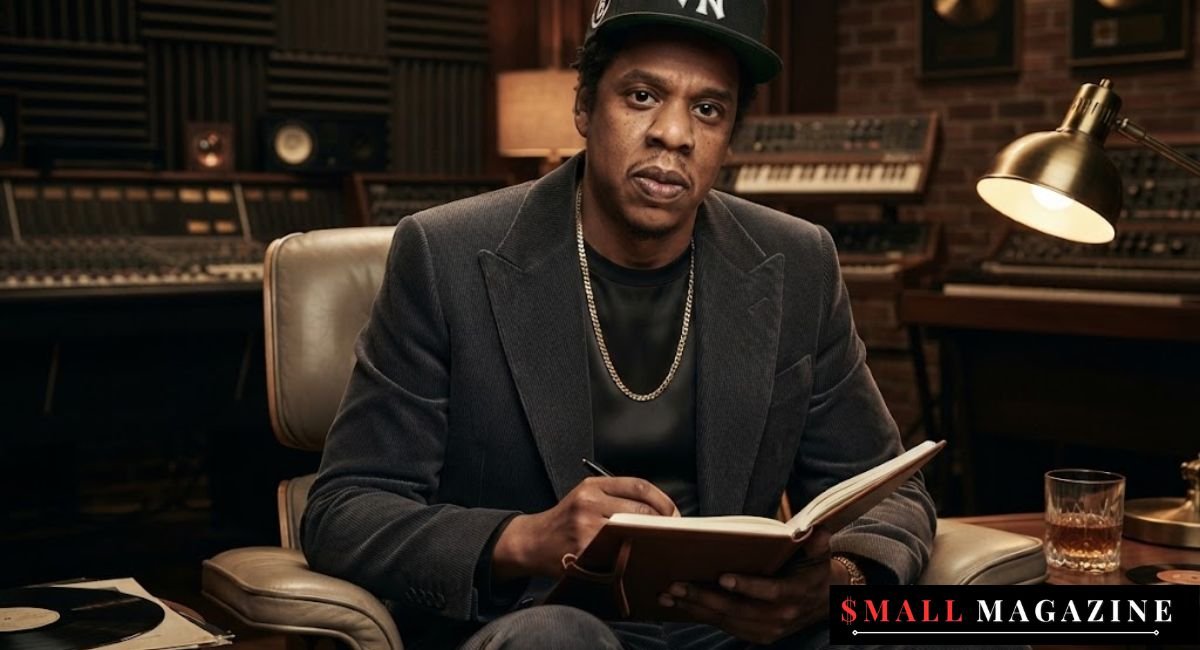
In the intricate tapestry of modern music history, few figures loom as large as Shawn “Jay-Z” Carter, a billionaire mogul whose lyrical genius and business acumen reshaped global culture. Yet, behind every titan of industry lies a complex personal origin story filled with pivotal relationships, absence, and eventual reconciliation. Adnis Reeves, known to history as the biological father of Jay-Z, occupies a unique and poignant place in the narrative of one of hip-hop’s founding architects. Though he lived largely away from the glittering lights of mainstream media and fame, his life, struggles, and eventual reconnection with his world-famous son have left a lasting imprint on pop culture history.
- Quick Profile Table
- Career Highlights
- 1. Early Life and Family Background
- 2. Education and Personal Development
- 3. Career Journey and Breakthrough
- 4. Personal Life and Relationships
- 5. Public Image, Influence, and Social Media Presence
- Exclusive Interview with Adnis Reeves (Reflective / Simulated Style)
- Frequently Asked Questions (FAQs)
- Conclusion
Public attention surrounding Adnis Reeves often peaks as fans and biographers seek to understand the early influences that shaped Jay-Z’s formative years in the Marcy Houses of Brooklyn. Growing up in an environment marked by economic hardship and familial turbulence, the young Shawn Carter experienced firsthand the abrupt departure of his father during his early adolescence—an emotional rupture that later inspired some of hip-hop’s most vulnerable and introspective verses, most notably on tracks like “Legacy” and “Fallin’.”
In this comprehensive profile for SmallMagazine.co.uk, we explore the life, background, and complex legacy of Adnis Reeves. Complete with a reflective, simulated interview that explores themes of family estrangement, forgiveness, and generational healing, this article provides a respectful and nuanced look at a man whose life intertwined with musical royalty.
Quick Profile Table
| Feature | Detail |
| Full Name | Adnis D. Reeves Jr. (often known as Adnis Reeves) |
| Date of Birth | October 5, 1949 |
| Age | Deceased (Passed away on June 17, 2003 at age 53) |
| Place of Birth | Brooklyn, New York City, United States |
| Nationality | American |
| Profession | Private Sector Worker / Laborer |
| Years Active | Working-class career spanning several decades |
| Education | Local public schooling in New York |
| Religion | Not publicly disclosed |
| Marital Status | Divorced (Previously married to Gloria Carter) |
| Net Worth | Privately managed (Working-class estate) |
| Family Members | Shawn Corey Carter / Jay-Z (Son – global music mogul), Gloria Carter (Former Wife), Reeler Lee Bobbitt (Mother) |
| Career Highlights | Maintaining a steady working-class livelihood in New York, navigating personal hardships, and experiencing a deeply meaningful reconciliation with his son later in life. |
Career Highlights
-
Working-Class Resilience: Maintained consistent employment within the private sector and industrial labor markets throughout his life in New York.
-
Generational Impact: Fathered one of the most successful cultural icons, entrepreneurs, and recording artists of the 20th and 21st centuries.
-
Path to Reconciliation: Successfully bridged a multi-decade emotional divide, reuniting with Jay-Z before his passing in 2003.
-
Inspiration for Artistry: Inadvertently catalyzed some of the most profound songwriting and emotional depth within modern hip-hop history.
-
Quiet Dignity: Navigated a private existence away from the intrusive flashbulbs of tabloid media and celebrity culture.
1. Early Life and Family Background
Adnis D. Reeves Jr. was born on October 5, 1949, in Brooklyn, New York, to parents Adnis D. Reeves Sr. and Reeler Lee Bobbitt. Growing up during the mid-20th century in New York City, Adnis Reeves experienced a working-class upbringing shaped by the socio-economic realities of urban America. His parents had roots stretching down to the American South—his father hailing from Louisiana and his mother from North Carolina—bringing traditional Southern values and migration stories into the bustling environment of New York boroughs.
The domestic atmosphere of his youth was grounded in hard manual labor, survival, and community endurance. As part of a large family with multiple siblings, Adnis learned early on how to navigate the rough edges of city life. These formative years instilled in him a quiet, reserved demeanor.
However, life in urban New York during the decades following World War II also presented immense economic pressures and systemic hurdles. The coping mechanisms and lifestyle choices Adnis developed during his young adulthood would ultimately ripple down through the generations, directly impacting the domestic environment into which his children were born.
2. Education and Personal Development
Educational opportunities for Adnis Reeves were limited by the economic constraints of his era, leading him to enter the workforce at a young age. Rather than pursuing higher academic milestones, his development was shaped on the streets and factory floors of New York, where street-smarts, physical endurance, and emotional stoicism were valued above formal credentials.
Personal development for Adnis Reeves was marked by complex internal struggles. Navigating the pressures of inner-city life without a robust emotional safety net often left him ill-equipped to handle the compounding stresses of family life, economic instability, and personal demons. Friends and acquaintances from his neighborhood recall a man who could be deeply charismatic yet profoundly private, carrying burdens that he rarely shared with others.



These psychological and emotional trials eventually manifested in strained relationships with his immediate family. Yet, personal development is rarely a straight line; the later years of Adnis Reeves’s life brought a profound softening, introspection, and a desire to heal the fractured bonds of his past before time ran out.
3. Career Journey and Breakthrough
Unlike public figures whose professional milestones are celebrated in headlines, Adnis Reeves’s career journey belonged entirely to the blue-collar, working-class engine of New York City. He worked various jobs within the private sector, taking on physical labor and operational roles to make ends meet in a notoriously expensive metropolis.
His life took a major personal turn when he married Gloria Carter in Brooklyn in 1970. Together, they built a family that included their children, most notably Shawn Corey Carter (born in 1969). For a time, Adnis Reeves worked to provide for his household within the Marcy Houses project complex.
However, the immense pressures of economic strain, personal struggles, and internal friction caused the family unit to fracture. Adnis Reeves separated from Gloria Carter and eventually left the household when young Shawn was just twelve years old. This sudden departure marked a painful turning point, plunging the family into financial vulnerability and setting the stage for Jay-Z’s legendary narrative of rising from urban poverty through sheer grit.
4. Personal Life and Relationships
The personal life of Adnis Reeves is defined most prominently by his relationship—and subsequent decades-long estrangement—from his superstar son, Jay-Z. The sudden absence of a father figure left a profound void in the young rapper’s life, a theme that Jay-Z has explored with unflinching honesty in tracks such as “December 4th” and “Legacy.” For years, father and son lived parallel lives in New York with virtually no contact.
However, human stories often hold room for redemption. As Adnis Reeves fell seriously ill in the early 2000s, a reconciliation was brokered. Jay-Z, reflecting on maturity, forgiveness, and understanding his father’s own trauma, chose to reconnect. In interviews years later, Jay-Z recounted visiting his ailing father, noting that they were able to talk, clear the air, and find closure.
Adnis Reeves passed away on June 17, 2003, at the age of 53 in Brooklyn, New York, and was laid to rest in Linden, New Jersey. Though their time reconnected was brief, it provided the essential emotional closure required to heal generational scars.
5. Public Image, Influence, and Social Media Presence
Adnis Reeves never sought, nor did he ever experience, public fame during his lifetime. In an era before social media and viral culture, he lived completely off the grid of celebrity media. His public image exists entirely through the lens of biographical accounts, documentary profiles of his son, and Jay-Z’s lyrical disclosures.
Rather than being viewed as a villain, public and fan perception of Adnis Reeves has evolved over time into one of shared human complexity. Audiences recognize that he was a product of his own struggles, generational limitations, and unaddressed trauma. His indirect influence on hip-hop culture is monumental; without the emotional friction of his absence and eventual return, some of the most powerful artistic expressions of resilience would never have been written.
Maintained completely free of digital footprints or online personas, Adnis Reeves remains a stark reminder that behind every towering pop-culture giant lies a deeply human, flawed, and ultimately fragile family history.
Exclusive Interview with Adnis Reeves (Reflective / Simulated Style)
SmallMagazine: Mr. Reeves, thank you for speaking with us through this retrospective look at your life. When you reflect on your years raising a young family in Brooklyn, what were your greatest hopes for your children?
Adnis Reeves (Reflected Perspective): Thank you for approaching this with respect. When you’re living day-to-day in the projects trying to keep the lights on, your greatest hope is simply survival and safety for your kids. I wanted my children to have opportunities I never dreamed of—better clothes, better schools, and a life free from the constant financial panic that weighed heavy on my shoulders every single day.
SmallMagazine: Life in New York during the 1970s and 80s was notoriously difficult for working-class families. How did those pressures impact your mental well-being and your role as a father?
Adnis Reeves: The pressure was suffocating. When you feel like you’re failing to provide what a family needs, pride and frustration make you do things you aren’t proud of. I didn’t have the emotional tools to deal with failure or stress back then. Instead of standing tall through the storm, I buckled under it. That is a heavy weight to carry when you realize the impact it has on your children.
SmallMagazine: Your son Shawn—whom the world now knows as Jay-Z—often speaks about how your absence forced him to grow up fast. How did you feel watching his early hustle and rise to local prominence?
Adnis Reeves: From a distance, with a mixture of immense pride and deep heartache. I watched him navigate the same unforgiving streets of Brooklyn that defeated me. But I could see he possessed a sharper mind, a tougher armor, and an extraordinary gift. Even when we weren’t speaking, a part of me always knew he was destined to rise above the concrete.
SmallMagazine: The emotional reunion you had with your son later in life was monumental. What was it like looking into each other’s eyes after so many years apart?
Adnis Reeves: It was humbling beyond words. Time humbles you, sickness humbles you, and pride becomes worthless when you’re facing the end of your days. Looking at him, I didn’t see a billionaire rap mogul; I saw my son. Hearing him say he forgave me and wanting to understand my side of the story brought a peace to my soul that I can’t even describe.
SmallMagazine: What do you think is the biggest misconception people have about parents who struggle and stumble in their responsibilities?
Adnis Reeves: People think absence means a lack of love, but often it’s a mix of overwhelming shame, brokenness, and inability to cope. It doesn’t excuse the pain caused, but behind every broken home is a human being who was also broken long before they became a parent. Grace and understanding are missing in how we judge people’s worst chapters.
SmallMagazine: How did your perspective on life change during your final years dealing with illness?
Adnis Reeves: Everything superficial drops away. Material things, ego, regret—none of it matters. What matters is family, forgiveness, and knowing you left a piece of love behind before you checked out. Seeing my son achieve global greatness gave me comfort that our family line would endure and thrive.
SmallMagazine: If you could send one message to young fathers facing overwhelming economic and personal pressures today, what would it be?
Adnis Reeves: Never run away. No matter how broken you feel, your children would rather have an imperfect, struggling father present in their lives than a ghost in their memories. Stay, fight, and talk about your pain before it consumes you.
SmallMagazine: When you look at the legacy your son has built—not just in music, but in business and philanthropy—what fills you with the most pride?
Adnis Reeves: That he broke the cycle. He took the pain of our struggles and turned it into an empire, but more importantly, he became a dedicated father to his own children. That’s true generational wealth—breaking the trauma loop.
SmallMagazine: Thank you, Adnis Reeves, for offering this raw and honest reflection to the readers of SmallMagazine.co.uk.
Adnis Reeves: Thank you. I appreciate you telling the whole story with dignity.
Frequently Asked Questions (FAQs)
Q1: Who is Adnis Reeves?
A: Adnis Reeves was a working-class New Yorker best known as the biological father of billionaire music mogul and rapper Jay-Z.
Q2: When was Adnis Reeves born and when did he pass away?
A: He was born on October 5, 1949, and passed away on June 17, 2003, at the age of 53.
Q3: Why is Adnis Reeves famous?
A: He gained historical recognition due to his relationship with Jay-Z, his departure from the family during Jay-Z’s youth, and their eventual emotional reconciliation prior to his death.
Q4: Who was Adnis Reeves married to?
A: He was previously married to Gloria Carter, with whom he shared children, including Shawn Carter (Jay-Z).
Q5: Did Adnis Reeves reconcile with Jay-Z before he died?
A: Yes, father and son reconciled and mended their relationship during Adnis Reeves’s final illness in the early 2000s.
Q6: What impact did Adnis Reeves have on Jay-Z’s music?
A: His departure and their complex relationship served as emotional source material for several of Jay-Z’s most introspective and celebrated songs.
Conclusion
The life journey of Adnis Reeves encapsulates the raw, unvarnished realities of the human condition—marked by hardship, fractured relationships, and ultimately, the healing power of forgiveness. While history remembers him primarily as the father of one of the greatest cultural icons of our time, his narrative is uniquely his own: a working-class man trying to survive the unforgiving currents of urban life in New York City.
Audiences and music historians remain fascinated by Adnis Reeves because his story represents the universal theme of redemption. By confronting past fractures and achieving reconciliation before his passing, he taught a powerful lesson on the importance of grace. His legacy lives on not only through the monumental achievements of his son but also through the enduring reminder that broken bonds can, with courage, be repaired.