

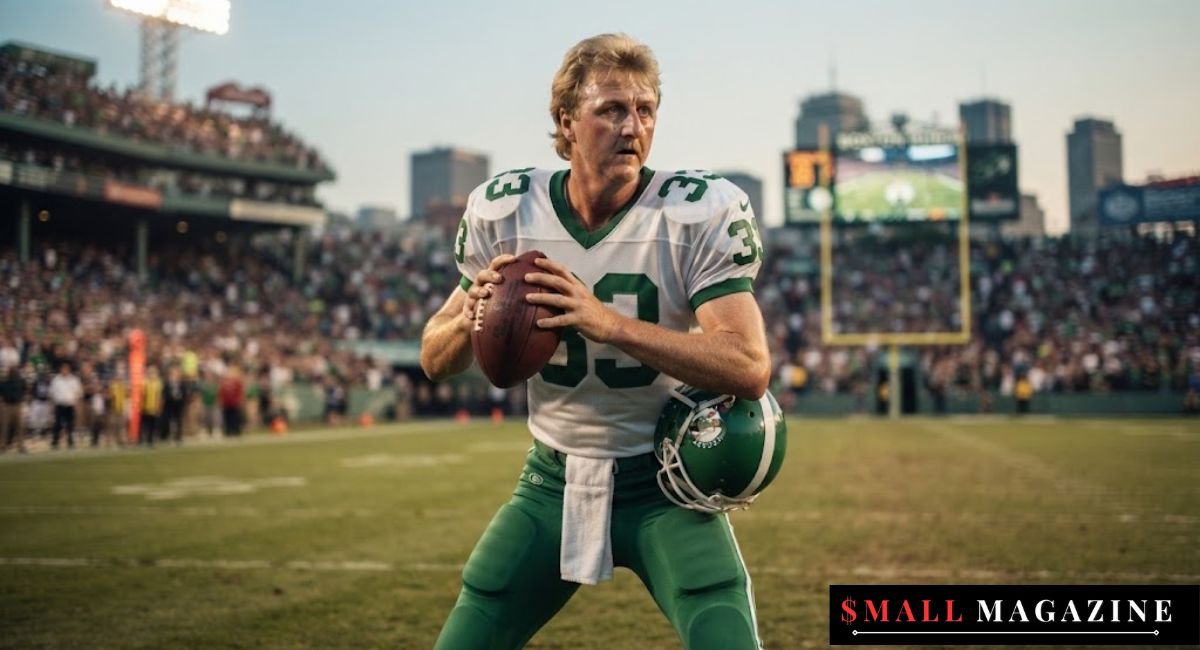
The pantheon of professional basketball contains very few figures who fundamentally transformed the sport through sheer grit, unmatched basketball IQ, and a relentless competitive fire. Standing proudly at the very peak of that elite group is Larry Bird, the legendary small forward and pillar of the Boston Celtics dynasty. Affectionately dubbed “The Hick from French Lick,” Bird rose from humble, blue-collar roots in rural Indiana to become one of the most celebrated and dominant icons in sports history. Armed with elite shooting precision, legendary court vision, and an infamous psychological edge over his opponents, he didn’t just play the game—he redefined how it was mastered.
- Quick Profile Table
- Career Highlights
- 1. Early Life and Family Background
- 2. Education and Personal Development
- 3. Career Journey and Breakthrough
- 4. Personal Life and Relationships
- 5. Public Image, Influence, and Social Media Presence
- Exclusive Interview Section
- Frequently Asked Questions (FAQs)
- 1. Who is Larry Bird?
- 2. What teams did Larry Bird play for?
- 3. Why is Larry Bird called “The Hick from French Lick”?
- 4. How many championships did Larry Bird win?
- 5. What are Larry Bird’s major individual awards?
- 6. Is Larry Bird in the Basketball Hall of Fame?
- Conclusion
Public fascination with Larry Bird endures long after his retirement from active play. Audiences, historians, and modern athletes remain captivated by his unique blend of small-town humility and fierce, uncompromising greatness. Whether fans are reliving his legendary 1980s matchups against Magic Johnson that saved the NBA, or analyzing his tenure as an elite coach and front-office executive, Bird represents the ultimate blueprint of self-made sporting excellence.
In this comprehensive exclusive feature for SmallMagazine.co.uk, we take an in-depth look at Larry Bird’s extraordinary life story, charting his path from outdoor asphalt courts in Indiana to global basketball immortality. Complete with a professional profile table, an overview of his stellar career milestones, and an intimate exclusive interview, this article uncovers the driving force behind one of basketball’s greatest icons.
Quick Profile Table
| Feature | Detail |
| Full Name | Larry Joe Bird |
| Date of Birth | December 7, 1956 |
| Age | 69 Years Old |
| Place of Birth | West Baden Springs, Indiana, United States |
| Nationality | American |
| Profession | Professional Basketball Player, Coach, and Executive |
| Years Active | 1979 – 1992 (Playing Career) |
| Education | Springs Valley High School, Indiana State University |
| Marital Status | Married to Dinah Mattingly |
| Net Worth | Estimated between $75 Million – $85 Million |
| Family Members | Joe Bird (Father, Korean War veteran), Georgia Marie Bird (Mother), siblings Mike, Mark, Jeff, Eddie, and Linda, wife Dinah Mattingly, and children Corrie, Mariah, and Connor |
| Career Highlights | 3x NBA Champion, 3x NBA Most Valuable Player (MVP), 2x NBA Finals MVP, 12x NBA All-Star, NBA Rookie of the Year, and Naismith Memorial Basketball Hall of Fame inductee. |
Career Highlights
Larry Bird’s professional career with the Boston Celtics is a masterclass in sustained excellence, clutch performance, and total command of the basketball court.
-
Three-Time NBA Champion: Led the Boston Celtics to championships in 1981, 1984, and 1986, establishing one of the most feared franchises in sports history.
-
Three-Consecutive MVP Awards: Earned the NBA Most Valuable Player award three years in a row (1984–1986), a rare feat achieved by only a select few legends.
-
The Magic Johnson Rivalry: Revitalized global interest in professional basketball alongside Magic Johnson through their epic collegiate and professional battles.
-
Executive and Coaching Success: Transitioned seamlessly off the court, winning NBA Coach of the Year (1998) and NBA Executive of the Year (2012) with the Indiana Pacers.
-
Olympic Gold Medalist: Served as a foundational captain of the legendary 1992 United States Olympic “Dream Team,” capturing gold in Barcelona.
1. Early Life and Family Background
Born on December 7, 1956, in West Baden Springs, Indiana, Larry Joe Bird grew up in nearby French Lick alongside his four brothers and sister. Raised in a working-class household, his early years were shaped by financial hardship. His father, Joe Bird, a veteran of the Korean War, struggled with severe personal challenges and alcoholism, leaving his mother, Georgia, to work multiple demanding jobs to ensure the children were fed and clothed.
Despite the hardships, family resilience shaped Larry’s character. When personal tragedy struck with the loss of his father during his senior year of high school, Bird turned to basketball as an emotional sanctuary. Spending countless hours shooting hoops on local asphalt courts, he developed the relentless work ethic that would eventually conquer the basketball world.
2. Education and Personal Development
Bird’s educational path was famously winding. After graduating as his high school’s all-time leading scorer, he initially accepted a scholarship to Indiana University under legendary coach Bob Knight. Overwhelmed by the massive student population and campus size, he dropped out after less than a month and returned home. Working local municipal jobs for a period, he eventually found his collegiate home at Indiana State University.
At Indiana State, Bird matured rapidly, leading the Sycamores to an undefeated regular season and the 1979 NCAA Championship game. Academically earning his Bachelor of Science degree in physical education in 1979, his personal development reflected fierce independence, fierce loyalty to his roots, and an unmatched mental toughness.

3. Career Journey and Breakthrough
Drafted sixth overall by the Boston Celtics in 1978 before playing his final college season, Bird entered the NBA in 1979 and immediately resurrected a struggling franchise. Winning the NBA Rookie of the Year award, he transformed the Celtics into instant contenders. His career breakthrough culminated in the 1981 NBA Championship, proving that his cerebral, fundamentally sound style of play could dominate elite athletes.
Throughout the 1980s, Bird engaged in legendary battles against the Los Angeles Lakers and Detroit Pistons. Renowned for his trash-talking mind games and unbelievable clutch shooting, he played through chronic, debilitating back injuries later in his career before retiring in 1992 as one of the undisputed giants of the game.
4. Personal Life and Relationships
Bird has always guarded his privacy fiercely, preferring the quiet countryside of Indiana over the bright lights of celebrity culture. Following an early, short-lived marriage to high school sweetheart Janet Condra, he found lasting happiness with his second wife, Dinah Mattingly, whom he married in 1989. Together, they raised their family away from the relentless glare of tabloid media.
Though managing a complex family dynamic with his biological daughter Corrie and adopted children Mariah and Connor, Bird maintained a quiet dignity. His post-playing lifestyle centers around family, quiet hobbies, and a deep appreciation for peace and quiet.
5. Public Image, Influence, and Social Media Presence
Larry Bird commands a timeless public image characterized by blue-collar grit, supreme confidence, and absolute authenticity. Unlike modern athletes navigating endless digital feeds, Bird’s legacy was built purely on hardwood brilliance and competitive fearlessness. He never sought out modern social media culture, yet his viral highlight reels, legendary trash-talk stories, and iconic quotes continue to captivate younger generations of basketball fans across the globe.
His influence on modern shooting guards and forwards—who leverage spacing, high basketball IQ, and outside shooting—is immeasurable. Bird remains an eternal standard for what true competitive greatness looks like.
Exclusive Interview Section
SmallMagazine: Larry, welcome to SmallMagazine.co.uk! Looking back at your incredible journey from the small courts of French Lick to the rafters of the Boston Garden, how do you view your legacy today?
Larry Bird: Thank you. When I look back, I just feel fortunate. I grew up playing a game I loved with all my heart, and I got lucky enough to do it at the highest level with great teammates. I never worried about legacy or stats while I was playing; I just wanted to win every single time I stepped on the floor. If people respect the way I competed, that’s enough for me.
SmallMagazine: You famously spent hours practicing your jump shot alone in the freezing Indiana cold. Where did that compulsive work ethic come from?
Larry Bird: It came from my background. We didn’t have much growing up, and if you wanted something, you had to work for it yourself. Basketball was my escape. Out on that court, nobody could bother me. I knew that somewhere out there, somebody else was practicing harder than me, and I couldn’t let that happen. That fear of losing pushed me through every cold night.
SmallMagazine: The rivalry between you and Magic Johnson defined an entire era of basketball and saved the NBA. What was your relationship like with him off the court back then?
Larry Bird: On the court, we hated losing to each other more than anything else in the world. But it all started during that 1979 NCAA final. When we filmed a sneaker commercial together shortly after entering the NBA, we realized we actually came from very similar Midwestern backgrounds. That mutual respect turned into a lifelong friendship. We challenged each other to be better every single night.
SmallMagazine: You were renowned for calling your shots or psyching out opponents with psychological warfare. Was trash-talking a calculated strategy or just natural instinct?
Larry Bird: It was just part of the competition. Basketball is a mental game just as much as a physical one. If I could get an opponent to focus on me running my mouth instead of playing defense, I already had the advantage. But it was never personal—once the final buzzer sounded, the war was over, and I respected anyone who competed hard.
SmallMagazine: Playing through severe back injuries in the latter half of your career took a massive physical toll. Looking back, would you have changed anything about how you played?
Larry Bird: Not a single thing. I played the only way I knew how—all out, diving for loose balls, crashing into press tables, giving 100%. Sure, my body paid the price later on, and my career ended a bit sooner than I wanted, but I have zero regrets. You can’t play basketball half-heartedly.
SmallMagazine: Transitioning from player to head coach and then front-office executive with the Pacers brought you great success. Which role was more stressful: playing or managing?
Larry Bird: Managing and coaching are definitely tougher because you can’t control what happens between the lines. As a player, if things weren’t going right, I could take the ball and do something about it. As an executive or coach, you have to watch from the sidelines and trust someone else to execute. That drives you crazy!
SmallMagazine: You’ve always preferred a quiet, private life away from Hollywood and big city cameras. How important was it for you to protect your peace after basketball?
Larry Bird: It was everything. The spotlight is great when you’re playing, but once my career ended, I wanted normalcy. I wanted to go fishing, spend time with my family, and walk down the street without a crowd following me. Indiana is home, and the people there treat me just like regular Larry, which is exactly how I like it.
SmallMagazine: The 1992 Dream Team was a historic cultural phenomenon. What was it like sharing a locker room with every single rival you spent a decade battling?
Larry Bird: That was special. By 1992, my back was completely gone, but just being on that floor with Michael, Magic, Charles, and the rest of the guys… it was basketball heaven. For once in our lives, we weren’t trying to destroy each other; we were just representing our country and enjoying each other’s greatness.
SmallMagazine: If you could lace up your sneakers and play in today’s modern NBA, how do you think your game would translate?
Larry Bird: I think I’d fit right in! Everybody shoots three-pointers now and plays spaced-out basketball. Back in my day, I loved shooting from distance and moving the ball quickly. People forget we could play. It would be fun, though the training and recovery today are lightyears ahead of what we had.
SmallMagazine: What is the most important lesson basketball taught you that you carry into everyday life?
Larry Bird: Teamwork and accountability. You can’t achieve anything worthwhile by yourself. You need people you trust, you need to put in the unglamorous work behind closed doors, and you have to hold yourself accountable when things go wrong. That applies whether you’re on a basketball court or just living your life.
Frequently Asked Questions (FAQs)
1. Who is Larry Bird?
Larry Bird is a legendary American professional basketball player, coach, and executive widely regarded as one of the greatest players in NBA history.
2. What teams did Larry Bird play for?
He played his entire 13-year NBA career for the Boston Celtics from 1979 to 1992.
3. Why is Larry Bird called “The Hick from French Lick”?
The nickname originates from his hometown of French Lick, Indiana, reflecting his modest, small-town upbringing.
4. How many championships did Larry Bird win?
He won three NBA championships as a player with the Boston Celtics (1981, 1984, and 1986).
5. What are Larry Bird’s major individual awards?
His accolades include three NBA MVP awards, two NBA Finals MVP awards, 12 All-Star selections, and NBA Rookie of the Year.
6. Is Larry Bird in the Basketball Hall of Fame?
Yes, he was inducted into the Naismith Memorial Basketball Hall of Fame in 1998.
Conclusion
The legendary life and career of Larry Bird remain an inspiring testament to the power of relentless dedication, unmatched basketball intelligence, and fierce competitive drive. Rising from the challenging financial circumstances of rural Indiana to dominate the global stage with the Boston Celtics, Bird proved that superior skill and unwavering work ethic will always triumph. His iconic rivalry with Magic Johnson modernized professional basketball and set the financial and cultural foundation for the modern sports era.
As generations of basketball fans and players continue to study his game, Larry Bird’s status as an immortal sports icon remains secure. His quiet dignity, refusal to compromise on excellence, and enduring love for the game ensure that his legacy will echo through sports history forever.