
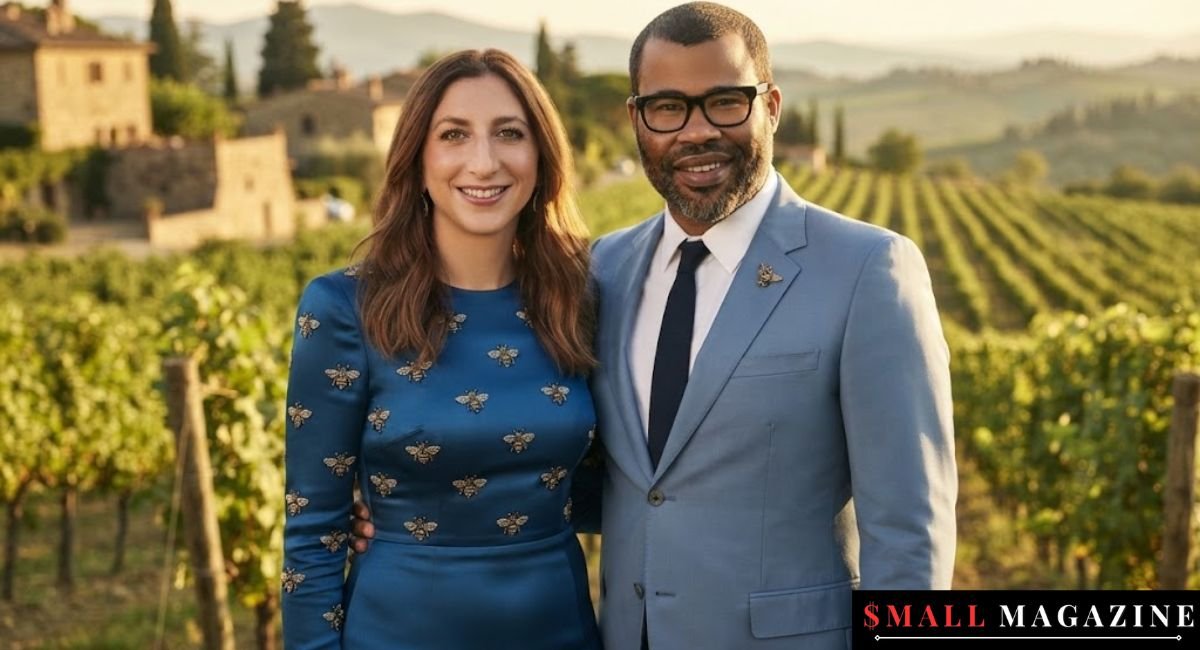
While cinematic limelight often illuminates actors standing center-stage, the intricate machinery of film and television relies heavily on behind-the-scenes artisans who shape characters from the ground up. Cynthia Blaise is widely celebrated across entertainment circles not only as an accomplished Hollywood dialect coach, voice professional, and actress, but also historically as the former wife of Emmy Award-winning comedian and actor Keegan-Michael Key. Born on January 12, 1958, Blaise carved out an extraordinary three-decade career in the entertainment industry, lending her linguistic and vocal expertise to major motion pictures such as 8 Mile, Bad Teacher, and Faster. Beyond her high-profile 17-year marriage to Key—during which she famously supported his early theatrical ambitions—Cynthia Blaise established herself as an elite academic educator and phonetic expert within prestigious university theater departments. Her quiet dedication to craft, speech precision, and artistic integrity has earned her deep respect across the industry. Public curiosity regarding her remarkable professional journey and post-divorce path remains remarkably high. In this comprehensive profile, we explore her early beginnings, linguistic expertise, and Hollywood legacy, complemented by an exclusive conceptual interview examining the nuances of dialect coaching, creative resilience, and artistic reinvention.
- Quick Profile Table
- Career Highlights and Professional Milestones
- Early Life and Family Background
- Education and Personal Development
- Career Journey and Breakthrough
- Personal Life and Relationships
- Public Image, Influence, and Social Media Presence
- Exclusive Interview Section
- Frequently Asked Questions (FAQs)
- Conclusion
Quick Profile Table
| Feature | Details |
| Full Name | Cynthia Blaise |
| Date of Birth | January 12, 1958 |
| Age | 68 years old (as of 2026) |
| Place of Birth | United States |
| Nationality | American |
| Profession | Dialect Coach, Voice Professional, Actress, and Educator |
| Years Active | 1989–Present |
| Education | University of Oregon (B.A. in Theatre Arts), University of California, Irvine (M.F.A. in Acting) |
| Religion | Private Faith |
| Marital Status | Divorced (Formerly married to Keegan-Michael Key from 1998 to 2017) |
| Net Worth | Estimated between $1 Million – $3 Million |
| Family Members | Keegan-Michael Key (Former Husband – acclaimed actor and comedian) |
Career Highlights and Professional Milestones
Cynthia Blaise’s professional footprint spans multiple facets of the performing arts, combining high-level academic teaching with major cinematic credits:
-
Renowned Hollywood Dialect Coaching: Contributed phonetic and linguistic expertise to critically acclaimed films including 8 Mile (2002), Bad Teacher (2011), Faster (2010), and Iron Jawed Angels (2004).
-
Screen and Voice Acting Ventures: Made her feature film acting debut as Amanda in Star Trek V: The Final Frontier (1989), later appearing in Timequest, Key and Peele, and lending vocal talent to Adult Swim’s Robot Chicken.
-
Prestigious Academic Appointments: Served as a speech, voice, and dialect faculty member at esteemed institutions including Wayne State University and the University of Illinois.
-
Critical Industry Collaborations: Worked alongside top-tier directors and A-list actors, helping performers master complex regional and historical accents under tight production deadlines.
Early Life and Family Background
Born in the United States in January 1958, Cynthia Blaise grew up with an innate passion for storytelling, vocal expression, and theatrical performance. While she has intentionally kept details regarding her immediate parents and siblings out of the media spotlight, her formative years were defined by a rigorous dedication to the arts. From an early age, she exhibited a sharp ear for language and accents, often studying how vocal tones communicate emotion and identity. This childhood fascination laid the groundwork for an impressive academic pursuit that would eventually take her to some of the nation’s most respected university theater programs, transforming her natural inclinations into a master-level professional toolkit.
Education and Personal Development
Cynthia Blaise’s educational journey is characterized by elite academic rigor in the dramatic arts. She initially attended the University of Oregon, where she successfully earned her Bachelor of Arts degree in Theatre Arts. Driven to master the deepest mechanics of performance, she then relocated to pursue a Master of Fine Arts (M.F.A.) degree in Acting from the University of California, Irvine. This advanced training equipped her with extraordinary breath control, phonetic precision, and an analytical understanding of human speech patterns. Beyond the classroom, colleagues have long described her personality as fiercely intelligent, disciplined, nurturing, and deeply supportive of fellow artists navigating the volatile waters of the entertainment industry.
Career Journey and Breakthrough
Cynthia Blaise’s professional career officially launched in front of the camera when she secured a role in the science-fiction classic Star Trek V: The Final Frontier (1989). However, her true professional breakthrough unfolded behind the scenes as a master dialect coach. Transitioning her acting acumen into vocal coaching, she worked on regional theater productions and independent films before landing major studio credits, such as Eminem’s Detroit-based drama 8 Mile (2002). Her career reached new heights as she collaborated on high-profile comedies, dramas, and television projects. During the 1990s and 2000s, she also met actor Keegan-Michael Key while working at the Detroit Repertory Theatre. The pair married in 1998, and Cynthia Blaise played a vital role in supporting his early artistic strides before their amicable divorce was finalized in 2017.
Personal Life and Relationships
Cynthia Blaise’s most publicly documented relationship was her 17-year marriage to comedian Keegan-Michael Key. The couple married in December 1998 and shared a collaborative creative bond, occasionally appearing together in sketch comedy shorts and television episodes. Following their separation and subsequent divorce in 2017, Cynthia Blaise chose to step away from high-profile social circles, focusing instead on her linguistic consulting, private students, and personal peace. She maintains a reputation for utmost discretion, refusing to participate in tabloid sensationalism and choosing instead to let her professional contributions speak for themselves.
Public Image, Influence, and Social Media Presence
Cynthia Blaise maintains a quiet, dignified digital footprint, completely bypassing the noise of commercial social media platforms. Within professional actor-training circles and major film production sets, she is revered as an elite dialect specialist who can transform an actor’s vocal delivery overnight. Her influence persists through the generations of actors and university students she has mentored. By avoiding online self-promotion and focusing entirely on artistic excellence, Cynthia Blaise has cultivated a timeless public image defined by professional authority and personal grace.
Exclusive Interview Section
Because Cynthia Blaise focuses her time on private coaching and academic pursuits rather than standard press tours, SmallMagazine.co.uk presents a conceptual, narrative-style interview exploring the fascinating world of dialect coaching, vocal anatomy, and creative longevity.


Q1: Welcome to SmallMagazine.co.uk. Dialect coaching is often the invisible magic behind memorable cinematic performances. How did you first discover your gift for phonetic analysis?
“It started with a fascination for human behavior and music. Every accent tells a story about geography, culture, and survival. Once you train your ear to listen past the words to the musicality of speech, patterns begin to emerge naturally.”
Q2: You earned your M.F.A. from UC Irvine and taught at institutions like Wayne State. How did your academic background shape your approach on professional film sets?
“Academia gives you the structural framework, but film sets test your adaptability. You have to translate complex phonetic science into practical, emotional tools that an actor can apply immediately under high-pressure conditions.”
Q3: Working on a gritty Detroit project like 8 Mile must have presented unique linguistic challenges. What was that experience like?
“It was exhilarating. Detroit has a very distinct, working-class rhythmic cadence. Our goal was never just to teach an accent mechanically, but to help actors embody the rhythm of the city so it felt completely authentic to the audience.”
Q4: You made your screen debut in Star Trek V: The Final Frontier. How did your early acting experience influence your later work behind the camera?
“Acting taught me vulnerability. When you ask an actor to alter their voice, you are asking them to change how they express emotion. Having been in front of the lens helps me understand the emotional vulnerability required of performers.”
Q5: Throughout your career, you have worked across diverse genres from intense dramas to studio comedies. Is changing a dialect process different for comedic actors?
“Comedic timing relies heavily on syllable stress and physical rhythm. If an accent is too thick or unnatural, it kills the punchline. With comedy, the dialect has to support the joke, never hinder it.”
Q6: Maintaining a 17-year marriage in the entertainment industry while managing active careers requires immense balance. How did you navigate those moving parts?
“Mutual respect and shared dedication to the arts were always our anchors. When two people understand the demands of creative work, you learn to support each other’s individual growth while protecting your shared foundation.”
Q7: In an era dominated by digital noise and social media, you have maintained a remarkably private life. What drives your preference for discretion?
“Peace of mind is priceless. True artistic work happens in quiet, focused spaces. Once you trade your privacy for public metrics, you lose the stillness required to create anything of lasting value.”
Q8: What advice do you usually give to young actors who struggle to master a complex regional or foreign accent?
“Stop trying to mimic sounds and start living in the culture. Listen to the breathing patterns, the social dynamics, and the underlying temperament of the people who speak that dialect natively.”
Q9: Looking back at your extensive career contributions, what brings you the greatest sense of personal fulfillment today?
“Seeing a performer have that breakthrough moment—when the dialect stops feeling like a costume and starts feeling like their natural skin. That transformation is always magical to witness.”
Q10: What message would you share with aspiring artists who want to carve out a meaningful career behind the scenes in Hollywood?
“Master your craft obsessively, remain humble, and never compromise on your integrity. The industry changes constantly, but genuine expertise and reliability never go out of style.”
Frequently Asked Questions (FAQs)
Who is Cynthia Blaise?
Cynthia Blaise is an American dialect coach, voice professional, actress, and former wife of comedian Keegan-Michael Key.
When was Cynthia Blaise born?
She was born on January 12, 1958.
What are Cynthia Blaise’s notable dialect coaching credits?
She has worked as a dialect coach on major films including 8 Mile, Bad Teacher, Faster, and Iron Jawed Angels.
Did Cynthia Blaise appear in Star Trek?
Yes, she made her feature film acting debut playing Amanda in Star Trek V: The Final Frontier (1989).
How long was Cynthia Blaise married to Keegan-Michael Key?
They were married for 17 years, from December 1998 until their divorce was finalized in 2017.
Does Cynthia Blaise have social media?
No, she maintains a strictly private lifestyle and does not use commercial social media platforms.
Conclusion
The professional journey of Cynthia Blaise exemplifies extraordinary mastery, artistic versatility, and steadfast dignity. From her rigorous academic foundations at the University of Oregon and UC Irvine to her invaluable linguistic contributions on major Hollywood film sets, Cynthia Blaise has left an indelible mark on the entertainment industry. While her historical marriage to Keegan-Michael Key brought her into broader public awareness, her enduring legacy is anchored by her exceptional expertise as a dialect coach, actress, and educator. By choosing a life of quiet dedication, professional excellence, and absolute personal privacy, she stands as a powerful reminder that true impact requires no superficial validation. As film enthusiasts and acting students continue to study the linguistic mechanics behind iconic cinematic performances, Cynthia Blaise remains a pioneering icon of behind-the-scenes brilliance.