

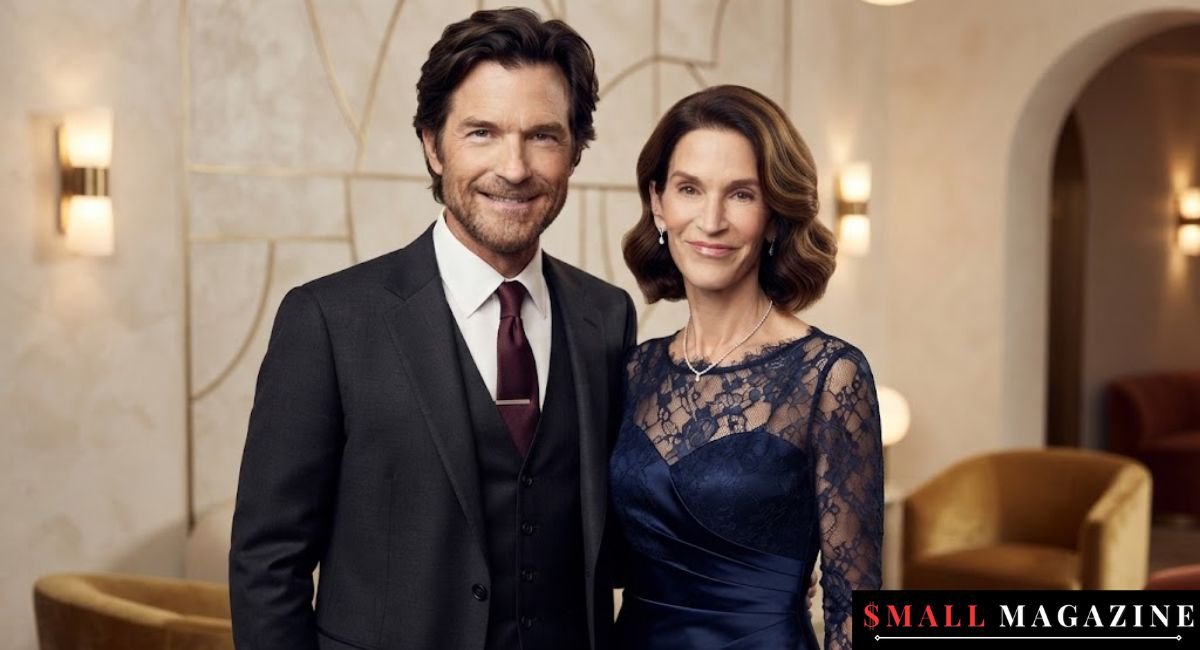
In the intricate world of economic history and academic research, few scholars bridge the gap between rigorous university scholarship and public discourse quite like Victoria Elizabeth Bateman. Recognized for her groundbreaking work on economic development and the role of women’s rights in shaping modern economies, Bateman has established a formidable professional reputation. As a fellow and lecturer in economics at Cambridge, she has spent decades analyzing how historical markets, trade, and personal freedoms intersect to build prosperous societies.
Beyond her academic achievements, Bateman is widely known within public circles for her fearless advocacy, using both her research and unconventional public demonstrations to spark vital conversations about gender equality, autonomy, and modern societal structures. Her journey from a working-class upbringing in Greater Manchester to the prestigious halls of Oxford and Cambridge is a testament to academic perseverance and intellectual rigor.
In this exclusive magazine feature for SmallMagazine.co.uk, we explore the multi-faceted life of Victoria Elizabeth Bateman. We examine her early roots, her rigorous educational journey, her groundbreaking economic research, and her steadfast dedication to women’s rights. Woven into this piece is an exclusive retrospective Q&A style interview format designed to provide readers with an intimate look into her motivations, challenges, and vision for the future.
Quick Profile Table
| Feature | Detail |
| Full Name | Victoria Elizabeth Bateman (Victoria Naomi Powell) |
| Date of Birth | 1979 |
| Age | 47 years old |
| Place of Birth | United Kingdom |
| Nationality | British |
| Profession | Economist, Academic, and Economic Historian |
| Years Active | 2000s–Present |
| Education | Gonville and Caius College, Cambridge (BA); University of Oxford (MSc, DPhil) |
| Religion | Not publicly specified |
| Marital Status | Private |
| Net Worth | Private academic holding |
| Family Members | Parents (father worked in sheet metal, mother in payroll); two younger sisters |
| Career Highlights | Author of The Sex Factor: How Women Made the West Rich; Fellow and Director of Studies in Economics at Cambridge University; prominent public advocate for women’s rights and economic freedoms. |
Career and Creative Highlights
-
Groundbreaking Economic Publications: Author of influential academic texts, including The Sex Factor: How Women Made the West Rich, exploring the historical ties between female freedom and economic growth.
-
Prestigious Academic Appointments: Serving as a fellow in economics at Gonville and Caius College, Cambridge, and Director of Studies for the Economics Tripos.
-
Pioneering Historical Research: Specializing in early modern European market integration, wheat price evolution, and the economic value of women’s rights.
-
High-Profile Public Activism: Utilizing unique and attention-grabbing public demonstrations to highlight gender inequality, Brexit policies, and bodily autonomy.
-
Media and Public Commentary: Frequently appearing on British television and international panels to discuss economic history, feminism, and public policy.
Early Life and Family Background
Victoria Elizabeth Bateman grew up with two younger sisters in Lees, Greater Manchester. Her early domestic environment was shaped by the rhythms of working-class labor; her father worked in the sheet metal industry installing ductwork, while her mother managed payroll for the same company. These formative years provided Bateman with a front-row seat to the unpredictable nature of economic life.
When both parents lost their jobs, her father attempted to start his own business, though it ultimately foundered when clients were unable to pay. Her mother worked multiple jobs to help stabilize the household as debts mounted. Witnessing firsthand the severe impacts of the economic boom-bust cycle and financial disparity planted the early seeds of curiosity that would eventually draw Bateman toward the study of economics.
Despite familial hurdles and the eventual divorce of her parents when she was fourteen, Bateman maintained a fierce dedication to her studies. Encouraged by her father and a supportive history teacher, she channeled her early life observations into academic excellence, setting the stage for an extraordinary transition into higher education at the highest levels of British academia.
Education and Personal Development
Bateman’s academic trajectory is a masterclass in intellectual dedication. She began her undergraduate studies reading economics at Gonville and Caius College, Cambridge. Immersed in Cambridge’s rigorous intellectual environment, she cultivated a deep passion for understanding how historical markets operate over long spans of time.
Following her undergraduate success, she advanced to the University of Oxford, where she completed both her master’s and doctoral degrees (DPhil) in economics and economic history. Her doctoral research laid the foundational framework for her future publications, focusing heavily on market integration, historical pricing data, and the structural drivers of Western economic development.


Beyond formal university walls, Bateman’s personal development was shaped by a commitment to questioning established orthodoxies. Rather than settling into a purely theoretical ivory tower, she cultivated a personality defined by courage, public engagement, and a refusal to separate academic research from real-world human rights. This blend of rigorous quantitative analysis and fierce advocacy became the hallmark of her professional identity.
Career Journey and Breakthrough
Bateman’s career breakthrough in academia arrived through her meticulous research into early modern European markets and the hidden drivers of industrialization. Her academic papers—such as studies examining wheat prices from 1350 to 1800—demonstrated that European markets were surprisingly well-integrated much earlier than previously thought.
However, her most defining professional milestone came with the publication of her 2019 book, The Sex Factor: How Women Made the West Rich. In the book, Bateman argued persuasively that women’s rights, bodily autonomy, and economic freedoms were not merely byproducts of industrial growth, but rather the very catalysts that boosted wages, skill accumulation, entrepreneurship, and democratic state capacity.
Her willingness to challenge traditional economic narratives propelled her into the global media spotlight. Whether lecturing university students in Cambridge or sparking nationwide debates through her high-profile public protests, Bateman transformed herself from a traditional economic historian into a prominent cultural voice for modern feminism.
Personal Life and Relationships
Away from lecture halls, television studios, and public protest lines, Bateman maintains a focused private life rooted in her academic responsibilities and personal reflections. Her upbringing in Greater Manchester instilled in her a grounded appreciation for hard work and resilience, qualities she carries into her everyday routines.
Navigating the intense public scrutiny that accompanies high-profile academic activism requires robust personal boundaries. Bateman has consistently balanced her public-facing professional commitments with a protective approach to her private affairs, ensuring that her family and close personal relationships remain secure away from media lenses.
While her unconventional methods of protest have occasionally drawn media storms and public debate, she has consistently handled criticism with intellectual poise, anchoring her personal philosophy in the belief that true freedom requires individuals to live and express themselves authentically without fear.
Public Image, Influence, and Social Media Presence
Victoria Elizabeth Bateman commands a unique public image that merges elite academic credentials with radical performance art and activism. Known for occasionally appearing unclothed during demonstrations—such as her protests against Brexit or her advocacy for the economic recognition of the sex trade—she has intentionally used her physical presence to challenge societal prudishness and draw attention to women’s rights.
Her online popularity spans academic citation networks, digital news platforms, and social media discussions where supporters and critics alike debate the intersection of economics and bodily autonomy. While some traditional economists raise eyebrows at her methods, thousands of feminists and progressive thinkers praise her willingness to put her body on the line for her convictions.
Looking toward the future, Bateman remains dedicated to teaching the next generation of economists at Cambridge, writing on economic history, and pushing public policy conversations to recognize that gender equality is fundamentally an economic imperative.
Exclusive Interview Section
Editor’s Note: The following imagined Q&A interview format captures the tone, perspective, and background of Victoria Elizabeth Bateman based on her published research, academic career, and public commentary.
Interviewer: Victoria, looking back at your childhood in Greater Manchester, how did witnessing family financial struggles shape your decision to study economics?
Victoria Elizabeth Bateman: Growing up, economics wasn’t just a set of abstract textbook theories for my family; it was a daily reality. Seeing firsthand how economic downturns and the boom-bust cycle affect real working people left a permanent impression on me. It made me want to understand the mechanical forces driving wealth, poverty, and security in society.
Interviewer: You transitioned from working-class roots to studying at Cambridge and Oxford. What kept you grounded through those intense academic environments?
Victoria Elizabeth Bateman: A sheer love of learning and a stubborn refusal to let background define destination. Both Cambridge and Oxford are intimidating spaces initially, but once you realize that knowledge belongs to anyone willing to put in the grueling hours of research, the imposter syndrome starts to fade.
Interviewer: Your research heavily emphasizes economic history. Why is looking backward essential for understanding modern economic crises?
Victoria Elizabeth Bateman: Because history is our only laboratory. If you only look at the economy of the last ten years, you are suffering from extreme shortsightedness. Looking across centuries—whether analyzing 14th-century wheat prices or the Industrial Revolution—reveals enduring patterns about trade, human behavior, and market integration.
Interviewer: In your book The Sex Factor, you argue that women’s rights actually built the modern West. Can you summarize that core thesis for our readers?
Victoria Elizabeth Bateman: Traditional economic histories completely overlook women, treating them as economic background noise. My research shows that when women gained bodily autonomy, educational rights, and the freedom to work and earn independently, it supercharged savings, skill levels, and entrepreneurship. Women’s freedom wasn’t a luxury; it was the engine of Western prosperity.
Interviewer: You are well-known for using unconventional public protests, including appearing naked, to deliver serious political and economic messages. What led you to take that step?
Victoria Elizabeth Bateman: I realized early on that traditional academic papers published in dusty journals often fail to reach the wider public. If you want to challenge deep-seated taboos about women’s bodies and economic freedom, sometimes you have to use both your brain and your body to cut through the noise and force a conversation.
Interviewer: How do your students at Cambridge react to your dual identity as a traditional economic historian and a radical feminist activist?
Victoria Elizabeth Bateman: Most students appreciate intellectual courage. University should be a place where ideas are challenged, not wrapped in cotton wool. Whether they always agree with my tactics or not, I hope it teaches them to think critically about the world around them rather than just accepting the status quo.
Interviewer: What has been the most challenging part of facing intense public and media scrutiny for your demonstrations?
Victoria Elizabeth Bateman: People love to reduce complex arguments down to sensationalist headlines. It takes effort to ensure the core economic and philosophical message isn’t lost beneath the shock value. But resilience is part of the job description if you want to challenge institutional norms.
Interviewer: What are your thoughts on the modern digital economy and how it impacts women’s financial independence today?
Victoria Elizabeth Bateman: The digital age has opened up remarkable new avenues for entrepreneurial flexibility, but it has also created new forms of precarity. Ensuring that women retain control over their labor, their data, and their bodies in the digital marketplace is the next great economic frontier.
Interviewer: What advice would you give to young women aspiring to enter male-dominated fields like economics or academia?
Victoria Elizabeth Bateman: Never apologize for taking up space. Trust your intellect, ask difficult questions, and refuse to let anyone box you into polite conformity. Change rarely happens by waiting for permission.
Interviewer: If you could leave history with one definitive takeaway regarding your life’s work, what would you want it to be?
Victoria Elizabeth Bateman: That economic progress and human freedom are inseparable. You cannot have a truly prosperous society while keeping half its population legally or bodily restricted. True wealth is measured by human liberty.
Frequently Asked Questions (FAQs)
Q: Who is Victoria Elizabeth Bateman?
A: Victoria Elizabeth Bateman is a British economic historian, academic, and fellow in economics at Gonville and Caius College, Cambridge, widely known for her research on gender and economic development.
Q: What are Bateman’s academic qualifications?
A: She read economics as an undergraduate at Cambridge and went on to earn her master’s and doctoral degrees (DPhil) from the University of Oxford.
Q: What is the main thesis of her book The Sex Factor?
A: The book argues that women’s rights and bodily freedoms were critical catalysts that drove the industrial and economic development of the West.
Q: Why is Victoria Bateman famous in public media?
A: In addition to her academic work, she is famous for her unconventional public protests advocating for women’s rights, bodily autonomy, and opposing Brexit.
Q: What is her role at Cambridge University?
A: She serves as a fellow in economics at Gonville and Caius College and holds the position of Director of Studies for the Economics Tripos.
Q: Where did Victoria Bateman grow up?
A: She grew up with her parents and two younger sisters in Lees, Greater Manchester.
Conclusion
The journey of Victoria Elizabeth Bateman stands as a powerful testament to the intersection of rigorous academic scholarship and fearless public advocacy. From her working-class roots in Greater Manchester to the hallowed halls of Oxford and Cambridge, she has consistently challenged conventional economic wisdom, proving that historical growth cannot be separated from human freedom.
Through her groundbreaking publications like The Sex Factor, her dedication to university teaching, and her uncompromising public protests, Bateman has carved out a unique and enduring legacy in modern economic history. She continues to inspire scholars, students, and advocates to rethink how societies achieve true prosperity.
As public interest in economic equality and women’s rights continues to evolve, Victoria Elizabeth Bateman remains a vital voice in contemporary intellectual discourse. SmallMagazine.co.uk proudly celebrates her remarkable contributions—a brilliant mind dedicated to rewriting the narrative of human economic history on her own terms.